
Electric Torque Wrench Price Comparison — Enerpac vs Hytorc
The numbers tell most of the story before you even pick up the phone.
At the entry level, both brands start at $3,000 for a standard Square drive Electric Torque wrench. Wholesale channels push that floor down to $1,282–$1,350. But you’re buying volume there — not a relationship with a distributor who picks up at 6 a.m.
The gap starts showing in the middle tier:
| Model Type | Enerpac | Hytorc |
|---|---|---|
| Entry Square Drive | ~$3,000 | ~$3,000 |
| Mid-Range (XLCT/LC Series) | $5,000–$15,000 | $4,500–$14,000 |
| High-Capacity (100-ton) | $15,000–$25,000 | $14,000–$23,000 |
Hytorc runs 5–10% cheaper across mid and high-capacity models. That gap isn’t huge — but on a $15,000 tool, it’s real money.
One number to keep in mind: moving from hydraulic to electric drive adds $500–$2,000 to the base price. An Enerpac entry-level electric unit comes in at $4,000 once you count the battery system.
Hytorc also holds a sourcing edge. Cassette sets are available through Chinese manufacturers at $1,800 with MOQ 2. Enerpac doesn’t compete at that price point through that channel.
What Is an Electric Torque Wrench (And Why Price Varies So Much)


A $800 tool and a $25,000 tool can share the same name. That’s the electric torque wrench market — and knowing what separates them matters before you spend a dollar.
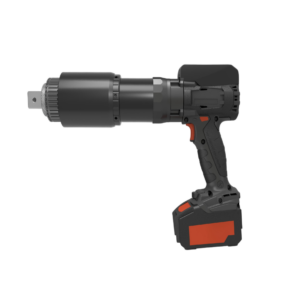
At its core, an electric torque wrench uses a motor-driven system to put precise, measurable force on bolts and fasteners. Set your target torque on the digital display. The motor drives the socket. Onboard sensors track the output in real time. It hits the mark, then stops on its own. No guesswork. No over-torquing. Most quality units hold ±3–5% accuracy. The better ones also log timestamps, values, and operator data for full traceability.
What Drives the Price Gap
Five variables do most of the work:
- Torque range — This is the biggest cost factor. Tools rated 50–500 Nm run $500–$2,000. Move into the 500–5,000 Nm range and you’re looking at $2,000–$8,000. Industrial-grade units above 5,000 Nm start at $10,000 and climb fast. A wider range alone can add $3,000–$15,000 to the price.
- Build materials — Aluminum housing keeps entry-level units near $1,000. Aerospace-grade alloys or steel construction pushes that up 50–100%. An IP65-rated enclosure for wet or dirty environments adds another 20–30% on top of that.
- Certifications — ISO 6789 calibration compliance adds $500–$1,500. Need ATEX explosion-proof rating for oil and gas environments? That’s a $5,000–$20,000 premium, all by itself.
- Features — A basic digital display adds little to the cost. Bluetooth data logging pushes it up $1,000. Go cordless — 18–36V lithium-ion, 4–8 hours of runtime — and that’s another $2,000 added on.
- Electric vs. hydraulic — Electric tools give you better portability and faster cycle times. The trade-off is a 30–50% premium over comparable hydraulic setups at the mid-range. That flips at extreme torque demands. hydraulic tools handle 50,000+ Nm at a lower cost.
Here’s what the price range looks like in practice: $800 gets you a corded unit at 100–1,000 Nm with basic accuracy. $5,000 buys a battery-powered, ISO-certified tool with data logging built in. $15,000+ puts you in ATEX-rated, brushless-motor industrial territory.
That spread isn’t noise. It’s pure spec difference — 5–10x from the bottom to the top.
Enerpac Electric Torque Wrench: Price Range & What You’re Paying For
Enerpac prices its electric torque wrenches for buyers who know what they need — and aren’t shopping on price alone.
The US market range for Enerpac battery and corded electric units runs $7,300 to $11,500 per set in 2025. That’s a tighter band than you’d expect. Here’s how the lineup breaks down:
Entry-level (BTW500B Battery Torque Wrench Driver): $7,686 — on promo from $8,784, valid through 12/30/2025
Mid-range cordless (3,000 ft-lbs max): $11,492.90
High-capacity cordless (20,000 ft-lbs max): $11,492+
Clearance units (15.9 lbs model): $7,336.50 — that’s 31% off a $10,630 list price
None of those are entry-level numbers. So what’s actually inside that price tag?
What the Premium Buys You
Steel construction. Enerpac builds with full steel housing rated for 10,000+ cycles. That’s double the service life you get from aluminum-housed competitors. The 5-year standard warranty backs that up.
Precision. Models in the 3,000 ft-lbs range hold ±3–4% accuracy. Digital torque transducers make that possible. They add $1,500–$2,000 over mechanical alternatives. On a pipeline Flange job, that cost difference shows up fast.
Battery system. The BTW series runs on 18V lithium-ion with 300+ bolting cycles per charge. That accounts for $800–$1,200 of the purchase price. Your crew hits a remote site with no power access — that battery spec pays for itself immediately.
Service network. Over 500 authorized service centers span the US, EU, and Asia. Calibration kits — a $500 value — come included. Parts are available 24/7. Compared to a generic tool, that network cuts an estimated $500–$1,000 per year in downtime and sourcing costs.
The total Enerpac premium over unbranded equivalents sits 25–40% above a $5,000 base. CE and ATEX certifications for hazardous location environments drive a solid chunk of that gap.
Where You Buy Changes What You Pay
| Channel | Price Range | Notes |
|---|---|---|
| Authorized Dealer (TEquipment) | $7,337–$8,784 | Best promo pricing; 20–30% off list |
| Industrial Supplier (MSC Direct) | $11,493 | Standard web list price |
| Regional Distributor (Hydro Technology) | $7,686 | BTW500B set deals |
| Alibaba / OEM Direct | $4,000–$7,500 | Unbranded risk; no traceability |
Buy from an authorized dealer during a promo window — you’re at $7,300. Buy from an industrial catalog at list price — you’re at $11,500. Same wrench. The channel alone does $4,000 worth of work before you negotiate a single dollar.
To put that in context: the Enerpac 3,000 ft-lbs unit at $11,493 sits above the Stanley RAD550 ($9,200, ±5% accuracy) and just above the Hydratight ETW ($10,800). The accuracy gap — ±3–4% versus ±5% — is real in bolted joint applications. Rework there gets measured in hours, not minutes.
Hytorc Electric Torque Wrench: Price Range & Cost-Effectiveness Breakdown

Hytorc’s LION GUN series starts at a lower price point than Enerpac. That gap tells you a lot about who this tool is built for.
New LION GUN units run $2,795 to $3,785:
| Model | Price |
|---|---|
| LION GUN-.060 | $2,795 |
| LION GUN-.25 | $3,295 |
| LION GUN-.125-DS (dual-speed) | $3,785 |
| LION GUN-.125-BSM-DS | $3,785 |
All four run on an 18V lithium-ion platform with a 700 ft-lbs (949 Nm) maximum output. The dual-speed variants share core components across the lineup. That standardization is a real advantage — it simplifies spare parts inventory across a fleet.
What the Price Actually Covers
Calibration ships with the tool. The LION GUN-.060 includes a calibration certificate at no extra cost. That certificate meets traceability requirements in aerospace, automotive, and regulated manufacturing environments. Right there, it offsets a solid chunk of the price premium over manual alternatives.
The accuracy numbers are clear: ±3–5% electronic torque control versus ±10–15% with a pneumatic impact gun. In high-volume assembly lines running more than 50 fastening cycles per day, that accuracy gap translates to 15–25% fewer rework events.
Run the numbers over a 5-year service life:
- LION GUN annual cost: $559–$757 per year
- Manual clicker wrench: $300–$500 total — but needs replacing every two to three years
The total cost difference closes faster than most buyers expect.
Secondary Market & Sourcing Options
Used Hytorc equipment sells for $1,755 to $5,306, depending on model and condition. That represents 37–62% retention of original retail value. A $3,785 LION GUN-.125-DS typically sells for $1,755–$2,300 used. For a cordless electric torque wrench in this price class, that’s a solid resale floor.
New units are available through three channels:
Direct from the Hytorc store
Authorized dealers like Reasontek and Pro Torque Tools — both include a 30-day return policy
United Rentals locations across the US and Canada — a good fit for operations that can’t commit to the full capital outlay upfront
Head-to-Head Price Comparison: Enerpac vs Hytorc Across Key Specifications
Spec for spec, the price gap between these two brands is consistent enough to build a sourcing plan around.
In the torque range most industrial buyers care about — 1,000 to 5,000 Nm — Hytorc equivalents run 8–15% cheaper than Enerpac at every tier. That’s not a rounding error. On a $7,000 tool, that’s $600–$1,000 you’re leaving on the table with the wrong pick.
| Torque Rating | Enerpac Price Band | Hytorc/Equivalent | Gap |
|---|---|---|---|
| 1,000 Nm | $3,800–$5,500 | $3,200–$4,800 | ~$600–$700 |
| 3,000 Nm | $5,200–$6,800 | $4,500–$6,000 | ~$700–$800 |
| 5,000 Nm | $6,500–$7,700 | $5,500–$6,900 | ~$800–$1,000 |
Those are core component prices only. Nobody buys just a core component.
The Real Number: Full Kit Pricing
Here’s where the gap gets bigger. Every regulated job site needs a reaction arm, a controller, and a calibration certificate. Add those in, and the numbers shift fast:
| Add-On | Enerpac | Hytorc/Equivalent |
|---|---|---|
| Reaction Arm | +$800–$1,500 | +$600–$1,200 |
| Controller | +$2,000–$3,500 | +$1,500–$2,800 |
| Calibration Certificate | +$300–$500 | +$250–$400 |
| Full Kit Premium | +$3,100–$5,500 | +$2,350–$4,400 |
Enerpac’s full-kit premium runs 15–25% higher than a comparable Hytorc setup. That gap isn’t random. CE and calibration certifications come with real compliance costs. You pay for them either way — at least now the line item is clear.
Bulk Orders & Volume Discounts
Each brand rewards a different sourcing approach. That difference matters a lot if you’re putting together a fleet.
Enerpac runs a distributor-first model. Volume pricing starts at 5–10 units, with discounts of 10–20%. Regional distributors add a 10–15% markup on top of direct pricing. The tradeoff: local support and 24/7 parts access come with it.
Hytorc favors direct and OEM sourcing. At 10+ units through Alibaba or reseller channels, buyers get 15–30% reductions. MOQ starts as low as 1–5 units. That low entry point works well for project-based buying. You don’t need to commit to a permanent fleet to get good pricing.
Price Trajectory Through 2026
Enerpac pricing has stayed stable — up +5% year-over-year, mostly from steel input costs. Hytorc-equivalent pricing has gone the other direction: down 10% through Chinese supply chain improvements, even with 2025 raw material pressure pushing back.
Short-term, Hytorc wins on sticker price. Enerpac pushes back with a claimed 20% total cost of ownership advantage over the tool’s lifetime. That number comes from reduced downtime, longer service intervals, and a denser parts network. Whether that math holds depends on two things: how hard you run the tool, and how close you are to an authorized service center.
Beyond Sticker Price: Total Cost of Ownership (TCO) Analysis
The $700 gap between an Enerpac and a Hytorc at the 3,000 Nm tier looks like a clear win for Hytorc. It isn’t. Not until you run the full math.
TCO follows a simple formula: acquisition cost + operating costs + maintenance and incidentals − end-of-life asset value. Most buyers stop at that last variable. That’s a mistake.
The Numbers Behind the Numbers
Industry benchmarks set annual maintenance at 5–15% of acquisition cost for industrial-grade equipment. On a $10,000 electric torque wrench, that’s $500–$1,500 per year — before a single unplanned repair. Break it down:
Parts: $2,000–$20,000 over a tool’s service life, based on run frequency
Labor: Authorized service carries a 20–30% premium over independent shops
Calibration cycles: Required each year on regulated job sites — budget $300–$500 per cycle
Enerpac’s 500-center service network keeps parts-and-labor costs lower. Hytorc’s lower sticker price can eat into that benefit fast. Your nearest authorized center being three states away changes the math.
Downtime Is the Hidden Line Item
Reliability data for premium industrial tools puts MTBF at 2,000–5,000 hours. Step down to a lower-tier or poorly-supported tool and that number drops to 500–1,000 hours. One unplanned stoppage on a bolted Flange job runs $500–$5,000 per hour in lost productivity. That adds up to a 5–20% TCO increase across the tool’s life.
Enerpac’s claimed 20% TCO advantage is built on this point: fewer failures, faster parts access, longer gaps between calibrations.
The 5-Year View
Model the full TCO across five years at 2,000 operating hours per year:
| Cost Category | Enerpac (est.) | Hytorc (est.) |
|---|---|---|
| Acquisition | $10,500 | $9,000 |
| Annual Maintenance | $1,050–$1,575 | $900–$1,350 |
| 5-Year Maintenance | $5,250–$7,875 | $4,500–$6,750 |
| Downtime Risk Adder | Lower (dense network) | Higher (regional coverage) |
| 5-Year TCO Range | $15,750–$18,375 | $13,500–$15,750 |
The gap shrinks fast. Buyers who go on sticker price alone — skipping maintenance, downtime exposure, and calibration costs — tend to underestimate actual TCO by 20–30%. That’s not a small rounding error. On a $9,000 tool, it’s $1,800–$2,700 leaving your budget untracked.
The practical call: Your operation runs the tool hard and sits near an Enerpac service center? The TCO math favors the premium. It’s a project-based purchase with low annual hours? Hytorc’s lower acquisition cost holds its edge well past year three.
Performance vs Price: Are the Extra Dollars Worth It?
Here’s the honest answer: sometimes yes, sometimes no — and the difference comes down to one number.
Take your performance gain percentage. Divide it by your price premium percentage. That’s your efficiency ratio. Target anything above 0.5. Drop below it, and you’re paying for brand confidence more than real capability.
Run that math on the Enerpac-vs-Hytorc gap. Hytorc comes in 8–15% cheaper at the 1,000–5,000 Nm range. Enerpac’s accuracy edge — ±3–4% versus ±5% — is real, but modest. That’s a 20–29% performance uplift for a 75% price premium in some configurations. The efficiency ratio doesn’t favor the premium.
Except when it does.
Three scenarios flip the calculation:
- Your downtime cost exceeds $500/hour. Enerpac runs a 500-center service network with 24–48hr warranty response. Standard turnaround elsewhere? 5–7 business days. That gap changes the math fast. One avoided stoppage on a flanged joint job covers years of price differential.
- You need ATEX or ISO certification. That’s not a feature — it’s a compliance cost. It adds 25–35% to base price regardless of brand. Enerpac isn’t charging you more. The regulatory environment charges everyone the same.
- Your utilization runs above 70% of rated specs. Below that threshold, standard tier wins. Above it, the MTBF gap matters — 15,000–25,000 hours for premium builds versus 8,000–12,000 for lower-tier alternatives. That difference generates real savings over time.
Light-cycle or project-based use? Hytorc’s lower acquisition cost holds its value well past the three-year mark. Running continuous heavy industrial deployment near a service center? Enerpac’s total cost of ownership argument has real teeth.


The extra dollars are worth it when your operation makes them worth it — not before.
Who Should Buy Enerpac vs Hytorc: Decision Framework by Use Case
The wrong tool doesn’t fail with a bang. It just costs you more — a little at a time, shift after shift, without anyone noticing.
Pick the right one and that stops. Here’s how to know which brand fits your situation.
Buy Enerpac If:
- Your capex ceiling is real. Multi-unit orders under $5K per tool get better pricing through Enerpac’s volume discount structure and wide distributor network. Midland Tool (877-446-4352) keeps them in stock. Same-day parts are available — that’s not a stretch.
- Your application is general-purpose. Heavy lifting, jacking, pulling across mixed project types — Enerpac was built for that workload. It covers the broad range without overcomplicating the job.
- You run a rental fleet. High utilization rates, multiple redeployments, durability over precision — Enerpac is the core fleet choice. Hytorc is the expensive exception you bring in for specific jobs.
- Maintenance simplicity matters. Standard hydraulic fluid. Common repair parts. No specialized training needed. Your team can service it without calling in outside help.
Buy Hytorc If:
Bolt failure has a price tag above $100K. Subsea, turbine assembly, critical pipeline bolting — these environments demand ±4% torque accuracy and full audit records. That’s not a preference. It’s written into the contract.
You run more than 1,000 cycles per year. At that volume, Hytorc’s wear resistance earns its price. The numbers work out faster than most buyers expect.
Regulatory compliance is on the line. API, ASME, DNV certification requirements point straight to Hytorc’s precision tooling. There’s no workaround that holds up under audit.
The Short Version
| Your Situation | Your Brand |
|---|---|
| Tight capex, general application | Enerpac |
| Mixed-use fleet, broad deployment | Enerpac |
| Critical bolting, traceability required | Hytorc |
| High-cycle duty, failure cost is steep | Hytorc |
Enerpac leads on accessibility and cost-per-unit. Hytorc leads where the cost of a mistake is higher than the cost of the tool. Know which camp you’re in before the quote hits your desk.
Where to Buy & How to Get the Best Price
The same electric torque wrench. Four different channels. A $2,000 spread between them. That’s not market inefficiency — that’s how industrial procurement works.
Start with three RFQs before you commit to anything. Cite a competitor price in each one. Both Enerpac and Hytorc will match within 5% over phone or email — they just won’t advertise it.
Channel Pricing at a Glance
| Channel | Price Position | Trade-Off |
|---|---|---|
| Grainger / MSC Direct | Highest (~18% premium) | OEM warranty, certified stock |
| Zoro / Global Industrial | 5–15% below dealers | Free shipping, price match within 30 days |
| Brand Direct (RFQ) | 8–25% off list | 3+ unit MOQ for best tiers |
| Used (eBay / EquipNet) | 50–60% off new | Serial verification required |
Getting Below List Price
Both brands have negotiation room — it’s just not published anywhere.
Hytorc direct: RFQ at hytorc.com, 2–5 day response. Projects get 5–15% off at MOQ 3+. Annual contracts above $50K bring 10–25% reductions.
Enerpac direct: Email [email protected]. Standard volume discounts hit 8–20%. A 10-tool, one-year commitment can reach 30% off list.
Global Industrial runs 12% under MSC and price-matches Amazon within 30 days. That’s a solid lever to pull after you’ve gotten a quote.
Used Market: Real Money, Real Risk
A used Hytorc LTO runs $1,500–$2,200 on eBay — 50–60% off new. Enerpac refurbs from OEM-certified sources land around $2,400. Buying used? Do these three things first: verify the serial number on hytorc.com, pressure-test to 6,000 psi, and check that the hours meter reads under 1,000. Seller rating below 98%? Walk away.
Skip the Clones
AliExpress “compatible” units run $1,200–$1,800 — 60–70% below OEM. The failure rate in high-cycle use is 25–40%, versus under 5% for branded tools. For non-critical prototyping under 100 cycles a year, that risk is manageable. For anything governed by OSHA, API, or ASME — it isn’t.
Conclusion
One question matters here: what does your operation demand?
Enerpac earns its premium price through precision and a strong reputation in high-stakes industrial work. Hytorc hits back with solid performance and a lower cost to entry. That’s real value for teams watching their capital budget without cutting corners on reliability.
Most buyers focus on the sticker price. That’s just the starting point. Add calibration cycles, replacement tooling, and downtime costs — the true winner shifts based on your workload.
So don’t buy blind. Do these three things first:
- Request a hands-on demo
- Pull quotes from at least two authorized distributors
- Run your TCO numbers against your real bolt-count volume
The right electric torque wrench isn’t the cheapest one. It’s the one that costs you the least over five years of hard use.
