
Content Framework: Hydraulic Pullers Cost + HYTORC vs Atlas Buying Guide
This guide covers three things, in a specific order. First, what hydraulic pullers cost across capacity tiers. Second, how HYTORC and Atlas Copco compare on specs and value. Third, a clear decision framework that points you toward the right tool based on how you work.
Here’s the structure:
- Hydraulic puller cost by tier — from $60 import sets at 5–10 ton, through $1,200–$7,000 mid-grade industrial kits, up to $40,000+ cart-mounted heavy systems
- Spec checklist for hydraulic pullers — tonnage headroom, jaw configuration, stroke length, hydraulic system quality, and the certifications that carry real weight
- HYTORC vs Atlas Copco price and capability breakdown — torque coverage gaps, per-tool costs, and full system pricing
- The buying decision — a five-point framework that matches your usage profile, load requirements, budget horizon, and safety obligations to the right tool
No filler. Each section ties straight to a purchasing decision.
What Is a Hydraulic Puller and Do You Need One?
A hydraulic puller does one thing no other tool can match: it pulls interference-fit components — bearings, gears, pulleys, hubs, bushings — off a shaft using controlled hydraulic pressure. Clean removal. No damage.
That distinction matters more than it sounds.
A mechanical puller relies on a threaded center screw. You turn it, apply force by hand, and hope the load stays centered. Under heavy resistance, it won’t. A hydraulic puller runs off a pump — hand, pneumatic, or electric. It delivers force as a direct, straight-line push through a cylinder. No torque. No twisting. No fighting the Wrench while the jaw walks off the race.
The output is a different category entirely: larger, smoother, and more distributed axial force. That’s why a hydraulic system handles what a mechanical one cannot.
Do You Need One?
The answer is specific:
- The component is seized, corroded, or press-fit to a high interference tolerance — long-service bearings on motor or pump shafts, hubs that haven’t moved in years
- Your mechanical puller is maxed out — you’re torquing the center screw and feeling it load off-center. You’re already past the tool’s safe range
- Force control matters — hydraulic systems build pressure slow and steady. That cuts the risk of sudden release, shaft damage, or bearing seat distortion
- You’re pulling the same components over and over — fleet maintenance, plant overhauls, production line servicing. Hydraulic saves real labor hours at scale
- The component is large — Enerpac builds 100-ton three-jaw hydraulic pullers for a reason. Heavy gears and large-bore bearings need that kind of output
The simple rule: big, tight, rusted, heavy, or pulled on a regular basis — hydraulic is the right tool. Anything else is a workaround.
How Much Does a Hydraulic Puller Cost? Breaking Down the Real Numbers
The number on the tag means almost nothing without context. A hydraulic puller can run you $83 or $13,698. Both prices are legitimate. It all depends on what you’re pulling.
Here’s how the market breaks down by capacity tier.
Light-Duty (≤5 Ton): $80–$1,200
At the low end, Harbor Freight’s Pittsburgh 5-ton three-jaw hydraulic gear puller lists at $82.99. Generic 5–10 ton sets on Alibaba run $80–$250 FOB China — two or three jaws, integrated hand pump, nothing fancy.
Move up to an industrial brand and the same rated tonnage costs far more. The BETEX HP 43, a 4-ton hydraulic puller from Dutch manufacturer Professional Bearing Tools, runs $810. That’s 10x the Harbor Freight price for the same rated capacity.
That gap isn’t arbitrary. Industrial brands like Betex carry CE certification and proof-test to 150–200% of rated load. Budget tools don’t.
Practical budget anchor: Light shop, occasional use — plan for $100–$400. Want an industrial name on it — $800–$1,200.
Medium-Duty (10–20 Ton): $200–$4,000
This tier splits hard by origin. Chinese-manufactured sets on Alibaba span $200–$2,000 depending on stroke length, pump type, and kit contents. Mid-tier industrial options — think Enerpac, Kukko, Betex — land at $1,500–$4,000 for a 10–15 ton set with a separate hand pump and hoses.
Practical budget anchor: General industrial plant handling a mix of 10–20 ton jobs — budget $1,500–$4,000 per quality set.
Heavy-Duty (≥30 Ton): $1,500–$15,000+
This is where price spread gets serious.
A Chinese-made 30–50 ton system with a manual or air-Hydraulic Pump runs $1,500–$6,000 on Alibaba. The Kukko Y28-200 universal set — German-made, well-suited to the 20–30 ton class — lists at $7,263 through Apollo Industries. The Hydraulic Supply Co. 30-ton set (3046), bundled with a P55 single-stage pump, Cylinder, hoses, and storage box, starts at $13,698.51.
That’s an 8x spread within the same capacity class.
Practical budget anchor: Heavy industry or utilities — expect $7,000–$15,000+ for a certified industrial kit. Go with a generic brand only after you’ve accounted for the full lifecycle risk.
What Moves the Price
Capacity tier is the biggest factor. But five other variables stack on top of it:
- Jaw count — 3-jaw pullers cost 10–30% more than 2-jaw versions. Reversible arm kits covering both configurations add another 10–15% premium.
- Reach and spread — Longer stroke and wider jaw opening require stiffer arms. Step up one size in the same series and expect 15–40% upcharges. Extended arms on heavy-duty sets can add $500–$1,500 to a standard kit price.
- Pump configuration — An integrated hand pump keeps costs down at light tonnages. A separate hand pump and hose setup adds $300–$1,000 for budget brands, $1,000–$3,000 for industrial. Air-hydraulic or electric pump packages add another $800–$3,000 on top.
- Kit completeness — Full sets (frame, cylinder, pump, gauge, hoses, cross-beams, case) run 30–70% above buying components on their own.
- Certification and safety factor — Brands meeting CE and ISO 9001 standards carry a price multiplier of 2–10x over uncertified generics at the same rated tonnage.
The Number Nobody Lists: Lifecycle Cost
Sticker price is where the comparison starts, not where it ends.
Annual maintenance on a 5–10 ton tool — reseal, gauge check — runs $150–$400 per service event. For a 30-ton class tool, that’s $300–$800. Over five years of heavy use, maintenance alone can reach 20–50% of the original purchase price.
Here’s the math that matters:
| Tool tier | Tool cost | Lifetime pulls | Maintenance | Cost per pull |
|---|---|---|---|---|
| Budget light-duty | $100 | ~100 | Minimal | ~$1/pull |
| Industrial heavy-duty | $10,000 | ~1,000 | $3,000 | ~$13/pull |
Thirteen dollars a pull sounds steep. Factor in what a failed cheap puller costs on a critical production line, and the picture changes fast. Unplanned downtime in a mill or power plant runs $5,000–$50,000 per hour. One incident wipes out the price difference between the budget and industrial tool — several times over.
HYTORC and Atlas Copco: No List Price, Quote Required
HYTORC and Atlas Copco don’t publish standard retail pricing for hydraulic pullers. Both work on distributor quotations — project-specific, region-specific, and volume-dependent.
To get a quote you can use:
- Specify the technical data upfront — required capacity (ton/kN), stroke, spread, jaw count, operating pressure (700 bar / 10,000 psi is standard), and pump type (manual, air, electric).
- Describe the application — shaft diameter, component type (gear, coupling, bearing), available clearance, expected annual pull frequency.
- Request two options — a standard manual-pump kit and a higher-output air or electric pump package.
- Ask for a line-item breakdown — tool price, pump price, hoses and gauge, training or commissioning, and estimated annual service cost. Don’t accept a single bundled number.
- Mention volume if it applies — both brands offer tiered discounts of 5–20% under frame agreements for predictable annual demand.

HYTORC Hydraulic Puller: Capabilities, Strengths, and Best-Fit Applications
HYTORC has been in the hydraulic tooling business since 1968. That history doesn’t show up in brochures. It shows up in how their tools are built to work together.
The core idea is simple: one pump, multiple tools. A single HYTORC VECTOR power pack — rated to 700 bar / 10,000 psi, weighing 28–35 kg — runs torque wrenches, nut splitters, tensioners, and hydraulic pullers off the same circuit. Same couplers. Same pressure class. No dedicated puller pump sitting in a corner collecting dust between outages.
In a refinery or power plant, a scheduled maintenance window might run five tools at once. Every extra piece of hardware adds risk. That’s where this setup pays off.
What HYTORC Pullers Cover
The capacity range runs 2 to 100 tons.
Mid-range sits around the EPHR-116 class at 50 tons. That size handles coupling and gear hub extraction on turbine shafts and compressors. The heavy end goes up to the LGH3100 at 100 tons. This one is built for large Flange separations and press-fit shaft work in steel mills, mining operations, and shipyards.
The smaller end — 2 to 30 tons — covers bearing removal on large electric motors. That’s the high-volume, day-to-day work in most industrial plants.
Precision Control as a Real Differentiator
What sets HYTORC apart on pulling tasks isn’t raw tonnage. It’s what the VECTOR pump does at the low end of the pressure curve.
The analog or digital gauges on the Vector read down to 1–2 bar increments. On a 50-ton cylinder, that means force steps of 0.5 to 1.5 tons per increment. You get a controlled ramp-up. No shock loads. No sudden release against a seized bearing race.
For wind turbine main bearings and high-speed rotating equipment — compressors, turbo-expanders — that level of control isn’t optional. It’s the minimum acceptable standard. One over-pull on a turbine shaft costs more than the tool itself.
The Single-Supplier Workflow
A standard HYTORC-ecosystem outage runs in four steps:
- Loosen bolted connections with AVANTI or MXT torque wrenches at 700 bar
- Split seized nuts using HYTORC-compatible nut splitters on the same pump circuit
- Pull bearings, hubs, or couplings with the hydraulic puller — same pump, same hose standard
- Reassemble and verify torque with ISO-calibrated HYTORC tools
One vendor. One set of couplers. One calibration contract. One training program across all tools.
For multi-site operators — refineries, offshore platforms, large utilities — that consolidation cuts two real costs. First, it reduces interface risk between mismatched systems. Second, it trims the admin work of managing multiple service contracts.
Who This Fits
HYTORC’s hydraulic puller ecosystem makes sense in three specific situations:
You already run HYTORC pumps and wrenches. Adding pullers costs no new pump investment. The infrastructure is already there.
Precise, documented load application is a hard requirement. Wind turbine gearbox work, high-speed rotating equipment — anywhere that an over-pull causes damage you can’t afford.
You need a single corporate framework agreement. HYTORC operates in over 100 countries through subsidiaries and regional distributors — Korea, US West, India, and beyond. Centralized procurement with shared service standards across regions is a real option, not a sales pitch.
Your operation runs heavy equipment maintenance across multiple sites. The wrench, splitter, and puller budget all come from the same capital approval. HYTORC is built for that buying pattern.
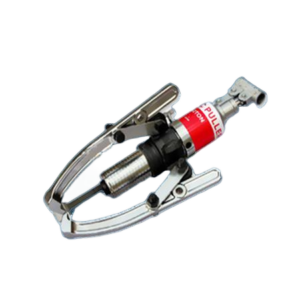
Atlas Copco Hydraulic Puller: Capabilities, Strengths, and Best-Fit Applications

Atlas Copco built the LPP 10 HD to solve one specific problem. You need embedded posts out of the ground — no backhoe, no digging, no crew stuck on the side of a road waiting for equipment.
That focus is the whole point.
This isn’t a general-purpose hydraulic puller like the HYTORC. It’s a portable, high-force extraction tool built for infrastructure work. Think crash barriers, signposts, fence posts, and steel tubes up to 200 mm / 8 inches in diameter. This is the work that happens in compacted ground, on live roadsides, with a two-person crew and a service truck.
What the LPP 10 HD Delivers
The standard hydraulic pull is 6 tons / 13,228 lb. Add the optional hand lever, and that jumps to 10 tons / 22,046 lb. That two-stage setup matters on field jobs. Post resistance doesn’t spike in any set pattern. Having a boost option — without swapping tools — keeps the crew moving.
Key specs:
Working pressure: 100–160 bar (1,450–2,321 psi) — works with standard mobile hydraulic power packs
Oil flow: 20–40 l/min — no proprietary pump needed
Service weight: 60 kg / 132 lb — heavy enough to stay anchored, light enough for a truck bed
Stroke range: 12–200 mm per pull
The automatic chain-tightening clamp uses hardened jaws to hold grip steady on vertical pulls. That detail matters in the field. A jaw that shifts under load is how posts come out crooked and equipment gets damaged.
Where This Tool Fits — and Where It Doesn’t
Atlas Copco places the LPP 10 HD inside a broader post drivers and pullers ecosystem. That tells you who this tool is for.
Strong fit:
– Road and traffic crews pulling crash barriers, signposts, and anchor posts
– Civil and utility teams pulling steel tubes or IPE/HPE/UPE profiles from compacted ground — no excavation needed
– Sites already running Atlas Copco hydraulic power packs — the 100–160 bar pressure range connects straight in
Not the right tool for:
– Bearing and coupling removal on rotating machinery — that’s HYTORC’s territory
– Jobs that need 30–100 tons of pulling force
– Precision removal of interference-fit parts on precision shafts
Distribution is broad. You can source the LPP 10 HD across the US, Canada, and multiple international markets. Options include direct Atlas Copco channels and third-party distributors like Compressor World and Crowder Supply.
The selection rule is straightforward. The job needs portable extraction in the 6–10 ton range. Posts or tubes up to 8 inches. You’re already running Atlas Copco hydraulic equipment. This tool fills that gap. For bearing removal on a turbine shaft, you’re in the wrong product category — look at dedicated mechanical pullers instead.
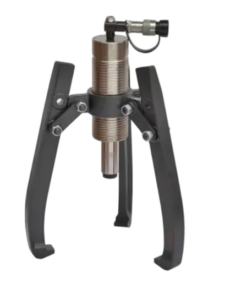
HYTORC vs Atlas: Head-to-Head Comparison Across 6 Key Dimensions
Six dimensions. That’s what separates a smart purchase from an expensive regret.
Both HYTORC and Atlas Copco build serious Hydraulic Torque Tools for serious industrial work. But “serious” covers a lot of ground. A wind turbine bearing removal and a roadside crash barrier extraction are both demanding jobs — and they don’t need the same tool. Here’s where the two brands differ, point by point.
1. Force and Torque Range
HYTORC’s full lineup runs 70 Nm to 187,000 Nm. The XLCT alone covers 329–42,011 Nm (243–30,986 ft-lbs). That’s one model built for protruding bolts and tight-clearance jobs.
The numbers tell a mixed story. Head-to-head, HYTORC starts 186 Nm lower at the light end. At the high end, HYTORC leads by 7,185 Nm in certain model matchups. Flip to overall output rankings, though, and Atlas Copco takes the lead at extreme torque levels.
The bottom line: HYTORC owns the low-to-mid torque range. For extreme high-output demand, Atlas Copco is the stronger pick.
2. Ecosystem Compatibility
HYTORC runs a broad tool family — MXT+, ICE, AVANTI, MXT, XLT, EDGE, STEALTH, XLCT, VERSA — across square wrenches and eye wrenches. The XLCT uses interchangeable cassettes. You get 6-point hex, 12-point hex, Allen drives, square drives, and open spanners all from one platform.
That sounds like plug-and-play. It’s not quite that simple. HYTORC’s torque conversion tables are customized by serial number. Cross-model and cross-brand compatibility means checking pump, hose, and tool serial numbers one by one.
The same rule applies to Atlas Copco. Before you assume compatibility, verify pressure rating, fitting type, flow rate, and calibration curve. Don’t assume. Confirm.
3. Precision and Operational Control
HYTORC’s design centers on an Anti-Return mechanism. Every hydraulic cycle builds torque without backslip. The claim is 100% efficiency per cycle. For low-torque, delicate equipment work, HYTORC’s lower starting torque gives it a clear edge in that range.
Atlas Copco points the other direction. Most comparison assessments place it as the stronger choice for exact precision in high-consistency industrial assembly. Think applications where repeatable, controlled output matters more than wide torque range coverage.
A simple guide:
– Small bearings and sensitive components → go with lower starting torque → HYTORC
– High-volume assembly with tight repeatability specs → Atlas Copco deserves a closer look
4. Procurement and Maintenance Cost Structure
Neither brand publishes a single price list. The general market structure for hydraulic torque systems looks like this:
| Tier | Typical Range |
|---|---|
| Mid-range hydraulic wrenches | $2,000–$8,000 |
| High-torque / specialized systems | $8,000–$20,000+ |
| Pump, hoses, calibration, spare heads | Quoted separately |
HYTORC builds its cost case on safety performance, cycle efficiency, and accessory versatility. Atlas Copco builds its case on extreme output and precision control. On continuous production lines, maintenance response time and spare parts availability often drive total cost of ownership harder than the upfront purchase price. Keep that in mind before comparing sticker prices alone.
5. After-Sales Support and Parts Availability
HYTORC’s support network is documented and easy to reach. US headquarters: 333 Route 17 N., Mahwah, NJ 07430. Phone: +1-201-512-9500 or 1-800-FOR-HYTORC. Email: [email protected]. Regional networks include HYTORC France, Hytorc Northwest, and distributors across more than 100 countries.
The depth of the product line — multiple model series, published torque conversion charts, interchangeable tooling — makes spare parts sourcing and tool selection support a more predictable process.
For Atlas Copco, get specific answers before you commit. Confirm: local authorized service point count, calibration cycle terms, whether calibration certificates carry ISO/IEC 17025 laboratory backing, and standard lead times. Don’t take the distributor’s word for it. Get it in writing.
6. Brand Standardization Fit
This dimension drives more purchasing decisions than any spec sheet.
Your site already runs HYTORC MXT, XLT, XLCT, VERSA, or STEALTH tools? Expanding that setup is straightforward. pumps, hoses, fittings, wrench heads, and accessories carry over. Your team is already trained. Calibration records are already in the system.
Switching to Atlas Copco from an established HYTORC environment isn’t just a tool swap. It’s a training, spare parts, pump interface, and calibration record migration — all at once.
Four questions that cut through the decision fast:
Does the torque coverage overlap with what you already own?
Are pressure ratings and fitting standards consistent?
Does this tool fit into your existing calibration process?
Are your operators already trained on this platform?
The decision rule is clean:
– Low-to-mid torque + existing HYTORC infrastructure → stay with HYTORC
– Extreme output or precision-critical assembly → evaluate Atlas Copco closely
– Confined space or protruding bolt work → HYTORC XLCT is the specific answer
– High proportion of standardized existing equipment → match the brand already in the system
Which One Is Right for You? Decision Framework Based on Your Real Work Conditions

Four variables decide this. Not brand loyalty. Not a sales rep’s recommendation. Not what another plant manager told you at a conference.
Here’s the framework.
Variable 1: How Hard Are You Running the Tool?
Single shift, less than 1,000 hours a year — you have options. Flexibility matters more than raw durability. HYTORC’s rental and service model works well here. It’s built for project-based use.
Two or three shifts, 2,000–4,000 hours a year — the math shifts. You need long maintenance intervals. You need a solid spare parts network. You need a brand that’s standard across facilities like yours. Both HYTORC’s heavy industrial series and Atlas Copco’s RTX line are built for this. Budget tools are not.
The rule: Running the hydraulic puller hard for a decade? Buy for that load.
Variable 2: What’s Your Torque Range?
- 200–20,000 Nm: Either brand covers this. Move to the next variable.
- Above 50,000–70,000 Nm: Atlas Copco has more documented heavy-load case history at this end. HYTORC fights back with flange management systems and no-reaction-arm setups that fit into tight spaces.
Variable 3: What’s Already on Your Floor?
Five or more pumps and wrenches from one brand already running? Stay there. Retraining staff, recalibrating tools, and rebuilding SOPs from scratch costs more than any sticker price gap between brands.
Your current setup is already mixed — some HYTORC, some others? A 3-year brand consolidation plan built around total cost of ownership makes more sense than adding another split-brand purchase to the mix.
Variable 4: How Are You Measuring Cost?
A mid-range 700-bar hydraulic pump with two or three wrenches runs $15,000–$40,000 upfront. Annual maintenance and calibration adds 3–8% of purchase price per year. Over five years, that adds up fast.
CAPEX is tight but OPEX has room? Look at HYTORC’s rental and service-bundle options. Your organization runs on full lifecycle cost? Build a real TCO model. Add up the initial purchase, annual maintenance, and the estimated downtime cost difference between brands.
Both brands meet your technical specs — and often they will. So run a side-by-side field trial. Same Flange, same bolt count, same operator. Time it. Score operator fatigue. Check for heat buildup and leaks. The data beats the brochure every time.
Practical Buying Checklist: What to Prepare Before Requesting a Quote
Going into a quote request without the right data gets you a tool that doesn’t fit the job — or a price that doesn’t match what you need.
Before contacting HYTORC, Atlas Copco, or any distributor, lock down these four things:
Your load numbers. State your maximum working load. Then calculate your safety factor by multiplying that number by 1.25–1.5. The job involves seized components or shock loads? Ask the supplier to validate at 2x peak load.
Your geometry. Know your shaft or bolt diameter range. Check available radial and axial clearance. Note the stroke required per pull. Attach a photo with rough dimensions marked — it cuts out three rounds of back-and-forth.
Your existing pump specs. Note the pressure rating (700 bar or 350 bar), flow rate, tank volume, and connector type. Mismatched fittings stall deals fast — don’t skip this step.
Your usage profile. Shop use once a month versus field work every day — these are very different situations. Material grade, seal type, pump class, and warranty terms all change based on how often and where you use the tool.
Request a full system quote, not individual components. Ask for line-item pricing that covers the tool, pump, hoses, commissioning, and annual service. Get delivery lead time and warranty terms in writing.
Conclusion
Picking between HYTORC and Atlas Copco isn’t about which brand is better. It’s about which tool fits your work — and the conditions you’re working in.
Need precision torque control, hazardous-environment certifications, and deep technical support? HYTORC earns its premium price. Need broad ecosystem compatibility, proven reliability at industrial scale, and a global service network you can count on? Atlas Copco delivers.
Hydraulic pullers aren’t impulse purchases. The real cost isn’t the sticker price. It’s what happens when you pick the wrong one.
Use the checklist:
- Know your torque range
- Know your environment
- Know your service expectations
Then request quotes from both. Let the specifics of your job site make the decision.
The best hydraulic puller is the one still performing three years from now — not the one that looked good in a brochure.
