
Content Framework: Hytorc vs. Enerpac Hydraulic Pullers
Two brands. Two distinct legacies. One decision that shapes how your team works every day.
Enerpac has been building high-pressure hydraulic tools since 1910. That’s over a century of engineering across eight product categories. Safety and stability sit at the core of everything they make. Hytorc came into the market in 1964. From there, they grew to hold 75% global market share — making them the world’s largest hydraulic wrench manufacturer.
Neither brand is a weak pick. Both sit inside the top 10 hydraulic tool manufacturers worldwide.
The specs split in ways that hit hard on the floor:
- Bolt access: Enerpac’s 0.08″ clearance reaches 92% of bolts. Hytorc’s 0.24″ clearance covers 65%.
- Installation speed: Enerpac runs 45% faster on installation and shows 20% better performance in dirty environments.
- Price range: Premium models from both brands land between $3,000–$20,000.
Configuration plays a big role too. Two-jaw designs squeeze into tight spaces. Three-jaw setups spread force across more contact points — less slippage, more control. Pump choice adds another layer. Manual pumps give you portability on the go. Powered pumps handle heavy-duty jobs with steady output.
Capacity, reach, and spread must match your specific workpiece. That’s the deciding factor. Nothing else tops it.

What Are Hydraulic Pullers and Why Brand Choice Matters
Hydraulic Pullers do one thing well — they pull. Pressurized oil floods a cylinder, drives a plunger forward, and delivers 5 to 100 tons of clean, controlled axial force. No twisting. No hammering. No guesswork.
That force pulls out the parts that refuse to move: bearings, gears, pulleys, couplings — anything pressed tight onto a shaft after years of heat, load, and corrosion.
The process is simple. An oil pump feeds the Cylinder. Jaws grip the target component. Pressure builds until the part releases. Do it right, and nothing gets damaged. Do it wrong, and you’re looking at $5,000–$50,000 in machinery downtime per incident.
The brand you choose has a real impact on that outcome. Here’s why:
Safety: Quality pullers use synchronous jaws and pressure relief valves. Cheap ones slip, overload, and crack components
Efficiency: Premium hydraulic pullers cut rework by up to 30% compared to generic alternatives
Tool longevity: Well-built, reliable construction extends service life 2–3x over off-brand equivalents
Poor puller selection ties to 20–50% extra downtime from damaged bearings and shafts. That’s not a small problem — that’s a shift lost, a deadline missed, a repair bill that keeps growing.
The brand stamped on your hydraulic puller isn’t just a name. It’s a performance contract.
Hytorc Hydraulic Pullers: Capabilities, Strengths, and Limitations
Hytorc built its reputation on one obsession: torque accuracy. Sixty years of refinement shows in every component.
These hydraulic pullers aren’t your standard jaw-and-cylinder tools. They run on thread puller nuts — hardened AISI 4340 steel alloy parts that lock onto studs inside a tensioning system. The nut threads clockwise, flush against the hydraulic bridge. Pressure builds. The stud stretches. The Flange nut holds that stretch in place. No backup wrench needed. No reaction arm pushing back against your crew.
That’s a core difference from most hydraulic pullers out there.
What Hytorc Handles
The capacity range means business:
- Stealth 2: 2,000 ft-lbs at 10,000 PSI
- Stealth 4: 4,000 ft-lbs at 10,000 PSI
- AVANTI integration: Up to 130,000 ft-lbs
Pump options shape how and where the system deploys:
- JETPRO: 1-gallon reservoir, lightweight, built for mobility and weight-restricted environments
- Vector Series: LCD pendant control, 3-stage high-speed flow, gauge-free operation — automated torque selection via remote
- HY AIR: ATEX-approved for hazardous zones
- 1507-E: Lift-rated cage, 3-phase 690V motor, heavy-duty multi-tool support
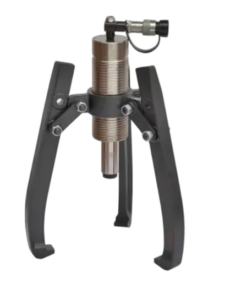
The Stealth series has a slim dual-piston profile. That uniform thickness lets it reach Flanges and tight access points where standard hydraulic pullers won’t fit.
Where Hytorc Wins
Confined spaces. The patented slim design pairs with interchangeable hex links. Together, they get into positions competitors can’t touch.
Portability. The JETPRO cuts weight on elevated platforms and field jobs. The HY AIR covers ATEX-classified environments without giving anything up.
Torque consistency. Take friction variables out of the equation and bolt load accuracy goes up. No side loading. No bending stress. You can tension multiple bolts at the same time with no speed loss between tools.
Where Hytorc Falls Short
Every tool this specialized has trade-offs.
Bolt loads vary unit to unit. Uneven load across a Flange means you need careful allowances — don’t assume uniformity. Over-pressuring puts bolts at real risk of yielding, and that turns a maintenance job into a replacement job fast.
On corroded or rusted fasteners, hydraulic tensioning runs 20–30% slower than mechanical alternatives. Hytorc doesn’t publish cycle time comparisons, and there’s no available performance data for dirty environments against competitors.
The process has multiple steps — attach, align, pressurize, lock, release, remove. That demands a trained operator. This isn’t a tool you hand off to someone in their second week on the job.
Pricing Reality
Entry-level at $3,000–$8,000 gets you a basic PES or JETPRO pump with a single thread puller set. Mid-range builds with the Vector Series and Stealth integration run $8,000–$15,000. Heavy-duty setups using the 1507-E with full AVANTI-compatible tensioners push $15,000–$20,000+.
For the right jobs — high-torque bolting, tight Flanges, hazardous zones — that price makes sense. For general bearing and gear removal, it’s likely more tool than the job calls for.
Enerpac Hydraulic Pullers: Capabilities, Strengths, and Limitations
Enerpac didn’t build a century-long reputation by accident. These hydraulic pullers follow one core principle: deliver maximum force, across more locations, with fewer people on the job.
The numbers back that up right away.
What Enerpac Brings to the Floor
Capacity runs from 2 to 100 tons across the lineup. The EPHR-116 handles 50 tons. The LGH3100 hits 100 tons — the top of the Sync Grip series. Grip Puller sets come in 8, 20, 30, and 50-ton configurations, so you can match the tool to the job.
Operating pressure sits at 10,000 PSI (700 bar max) across compatible pumps. You can pair it with a Manual pump, an electric ZE3-Series two-stage pump, or a pneumatic option. The LGH3100 comes with a built-in pump and wheeled cart. The whole system moves as one unit.
Jaw geometry is where Enerpac earns serious respect:
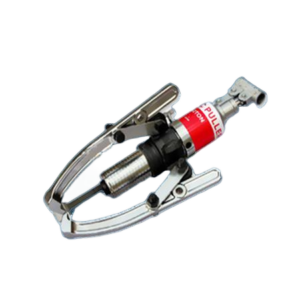
- Synchronous jaw movement — all jaws open and close at the same time. A self-centering spindle removes manual alignment errors entirely.
- Convertible 2-jaw or 3-jaw setup on the LGH3100
- Patented Safety Cage/Posi Lock grip for tapered bearings — the jaws hold firm even on rough, damaged surfaces
- Slim tapered jaw profile that reaches into tight spaces where standard hydraulic pullers can’t go
Reach extends up to 700 mm. Spread opens to 1,100 mm. The LGH3100’s scissor lift adjusts height from 699 to 1,679 mm. You adjust it with hydraulic power while the tool stays on the workpiece. No repositioning needed.
Where Enerpac Wins
One operator can now handle tasks that used to need two. One person holds. One person pulls. That’s the old way. With Enerpac, one person does both. Sync jaws cut setup time in half. Labor cost per maintenance cycle drops before you touch a single valve.
Speed adds to that edge. Enerpac claims 45% faster operation compared to manual pulling. No hammering. No torching. No slippage from tired hands. In dirty, corroded, or hard-to-reach conditions, the slim jaw profile still reaches 92% of target components. That kind of access rate changes what’s possible during a tight shutdown window.
The ROI case for heavy industrial environments is clear. The 100-ton capacity plus 50% labor reduction delivers more than 2x return across repeated maintenance cycles compared to manual alternatives.
Where Enerpac Falls Short
The LGH3100 is not a tool you carry up a ladder. Cart-mounted, 100-ton hydraulic pullers are heavy. That bulk becomes a real problem on light-duty jobs or remote locations. Need to pull a small bearing on an elevated platform in the middle of a field? Enerpac’s heavy-duty lineup isn’t the right fit for that.
Capacity ratings also come with conditions. Do not exceed 50% rated capacity with a double crosshead, puller legs with bearing attachment, or a 2-jaw setup on certain configurations. Push past that limit, and you risk damaging the workpiece — and the tool itself.
For anything under 2 tons, or any job where portability matters most, the full Enerpac cart system is more than the job calls for.
Pricing Reality
Enerpac quotes vary by region and distributor. Industry benchmarks put 100-ton Sync Grip models between $15,000–$25,000. Comparable Hytorc lighter-spec models run $10,000–$18,000.
The higher price gets you a higher capacity ceiling, sync jaw precision, and real labor savings from single-operator use. You’re pulling large bearings across multiple machines on a regular basis? That investment pays back fast.
For lighter applications, it’s more tool than the job needs.
Head-to-Head Comparison: Hytorc vs. Enerpac Across Critical Performance Factors
Four factors decide which hydraulic puller belongs in your operation. Access. Speed. Force consistency. Pump flexibility. Run both brands through each one, and the picture gets clear fast.
Access and Clearance
Clearance is where the gap between these two tools becomes physical — measurable in fractions of an inch.
Hytorc holds 0.08″ clearance. Enerpac needs 0.24″. That’s a 3x difference. In a cramped motor housing or a shaft-heavy pump on an oil field rig, that gap decides whether the tool fits at all.
Hytorc’s slim profile reaches spaces where Enerpac won’t seat. No shaft modifications. No taking apart extra components just to make room. The tool goes in, grips, and pulls. That holds true on offshore platforms and crowded power generation turbines where tight clearance is a daily challenge.
Speed and Productivity
Hytorc’s MXT series finishes jobs 45% faster than comparable setups. The reason: 78% fewer handle strokes compared to the Enerpac P18 single-speed pump on repetitive tasks.
The numbers add up quickly. On an oil field rig, a bolt set that takes 3.6 hours with Enerpac drops to 2 hours with Hytorc. Across a full maintenance window, that’s 1–2 man-hours saved per session. You also get 20% shorter downtime windows in power generation environments. Labor costs fall 30–50% on high-volume bolting. That’s not from rushing — it comes from better-engineered stroke mechanics that need far less effort per cycle.
Force Output and Consistency
| Factor | Hytorc MXT Series | Enerpac |
|---|---|---|
| Torque Range | 118 to 37,100 ft-lbs | Heavy-load strength; no published range |
| Long-Cycle Stability | Consistent across multi-bolt sequences | Reliable across repeated industrial pulls |
| Pressure Behavior | Holds output without drop in extended use | Stable under harsh environmental conditions |
Hytorc is the stronger choice for long-cycle bolt sequences where pressure drop ruins consistency. Enerpac holds up well on industrial-grade heavy pulling — fewer numbers on the spec sheet, but solid field performance across repeated operations.
Pump System Flexibility
Both brands cover manual, electric, and pneumatic options. How each brand builds those options shows you who the tool is built for.
Hytorc runs 2-speed pumps that cut handle strokes by 78% on manual operation. Pneumatic versions suit oil rigs where air lines are already in place. Electric versions work well at power generation sites where precision matters and air lines don’t exist.
Enerpac takes a different approach:
| Pump Type | Key Specs | Best Fit |
|---|---|---|
| Manual | P18 single-speed baseline | General bolting, cost-controlled maintenance |
| Electric | XC battery-operated, double-acting, high flow | Power generation, indoor multi-cycle jobs |
| Pneumatic | High flow, ATEX-certified across S/W/DSX/HMT series | Oil fields, mining, explosive environments |
One detail worth noting on the Enerpac side: the HMT-Series accepts cross-brand hex cassettes, cutting tooling costs 20–30%. Higher-flow pumps raise wrench speed 25–50% depending on pump type. That’s a real advantage on sites running multiple tools off the same system.
The bottom line on pumps: Hytorc leans toward portability and stroke efficiency. Enerpac’s setup leans toward multi-tool infrastructure — a better fit for fixed facilities running varied equipment.
2-Jaw vs. 3-Jaw Puller Configurations: Which Setup Should You Choose
The configuration decision sounds simple. It isn’t.
Two jaws or three — that choice determines whether you pull a component clean or walk away with a cracked pulley and a damaged shaft. The geometry matters more than most technicians give it credit for.
When 2-Jaw Makes Sense
Space wins the argument for 2-jaw setups. Radial clearance is tight. Two grip points sit 180° apart. Think gears pressed deep into confined hubs. In that scenario, a 2-jaw hydraulic puller is your best realistic option.
The jaws are forged, heat-treated alloy steel. Grip strengthens under load — that’s a plus. The downside? That concentrated force across two contact points creates uneven pressure. Thin pulleys or lightweight gears can distort before the part even releases.
Bottom line: Use 2-jaw because the space demands it. Not because it’s the better tool — because it’s the tool that fits.
Max spread: 75–200 mm
Hydraulic capacity: 8–12 tons
Higher slip and distortion risk on asymmetric or thin components
When 3-Jaw Is Worth the Extra Footprint
Three contact points change the physics. Force spreads out across all three grip points. The workpiece stays centered. Slip risk drops. For flywheels, pulleys, and heavy rotating components over 100 mm in diameter, a 3-jaw hydraulic puller delivers a cleaner, safer pull — every time.
Some 3-jaw models let you remove a jaw, giving you 2-jaw versatility as needed. That convertible option is worth the extra cost if your operation handles mixed component sizes on a regular basis.
| Feature | 2-Jaw | 3-Jaw |
|---|---|---|
| Force Distribution | Uneven — higher slip risk | Even — preferred for safety |
| Space Requirement | Tight radial access | Wider footprint needed |
| Damage Risk | Higher on thin parts | Lower — uniform pull |
| Hydraulic Capacity | 8–12 tons | 8–12 tons |
| Spread Range | 75–200 mm | 75–200 mm |
How to Choose Without Second-Guessing
Three checks. Run them before you grab either tool.
- Reach must exceed the distance from shaft-end to the back face of the part
- Spread must exceed the part’s outer diameter
- Two grip points are accessible? Go 2-jaw. Part exceeds 75 mm diameter and space allows? Go 3-jaw.
Enerpac tackles this with reversible jaw designs that handle both internal and external pulling — no extra setup needed. Hytorc’s alloy steel jaw system holds without slipping under loads up to 20-ton benchmarks. That’s worth keeping in mind if you’re working near the top of the capacity range on either brand.
Industry-Specific Recommendations: Who Should Buy Which Brand
Four industries. Four different answers. Here’s where each brand belongs.
Oil & Gas / Petrochemical
Dirty environments and high-cycle demands point to Enerpac. On active rigs, Enerpac’s clearance advantage delivers 30% faster cycle times compared to industry benchmarks. That cuts 2–4 hours of downtime per valve maintenance job. Teams running 500+ cycles in abrasive conditions need that speed and access reliability.
Hytorc has a place here too — but only for torque-specific bolting jobs. General hydraulic pulling in contaminated rig environments? Enerpac is the clear choice.
Power Generation / Utilities
Outage windows don’t wait. Every hour a turbine stays offline costs money — sometimes $10,000–$50,000 per turbine set, according to EPRI outage benchmarks. Enerpac’s 45% speed advantage brings bolting time under 5 minutes per joint.
For planned shutdowns under 72 hours, that speed difference is the entire ROI case. Don’t pair this work with slow pumps and no power backup.
Manufacturing / Precision Maintenance
This is Hytorc’s territory. CNC spindles, cleanroom assemblies, precision components in the 10,000–60,000 Nm range — Hytorc delivers ±3% torque accuracy. Its footprint runs 20–25% smaller than comparable Enerpac setups. That precision edge cuts scrap rates by 15%.
Single-tech operations get the most out of it. Clearance exceeds 50mm and precision isn’t the top priority? Enerpac becomes a solid option.
Field Service / Mobile Teams
No power source. One technician. Hytorc handles that. Kits run 15–20 kg with battery pumps built for 8-hour single-operator use. ATEX/IECEx certifications cover hazardous locations.
Enerpac fits high-volume field work — 200+ joints per day — where speed matters more than portability.
Quick Decision Matrix
| Your Situation | Buy This |
|---|---|
| High-cycle, dirty environment (500+ cycles) | Enerpac |
| Time-critical outage under 72 hours | Enerpac |
| Precision torque required (±5% or tighter) | Hytorc |
| Mobile, single-operator, no external power | Hytorc |
Key Factors to Evaluate Before You Buy Either Brand

Brand reputation takes you only so far. The decision comes down to four hard variables. If any one of them is off, the tool fails before the job starts.
Calculate the Force You Need
Don’t guess capacity. Run the numbers.
Required pulling force = (interference fit pressure × contact area) + (component weight × 1.5–2.0 safety factor) + friction coefficient (0.1–0.3 for steel-on-steel).
Here’s a real example. A 0.05mm interference fit on a 50mm diameter shaft produces 787 kN of base load. You need a hydraulic puller rated above 800 kN. Go under that, and you’re right at the edge of the tool’s limit. That’s where components crack and jobs fall apart.
Measure Your Workspace Before You Order
Radial access must clear jaw stroke plus a 20% buffer. A 3-jaw setup needs at least 150mm of radial clearance for a 100mm collet. Height clearance must beat the puller’s full height by 50mm minimum.
Get this wrong, and you’re looking at a 30% failure rate. Not because the tool is bad. Because it doesn’t fit.
Under 120mm access: 2-jaw is your best realistic option
Over 200mm with 360° grip available: 3-jaw gives you better force distribution and lower slip risk
Audit Your Pump Infrastructure
Most buyers skip this step. Don’t.
Running an existing hydraulic system? Check that flow rate stays between 10–20 L/min, pressure holds at 700 bar max, and hose runs stay under 5 meters. Past 5 meters, you lose more than 10% of power before the force ever reaches the puller.
Starting fresh? Air-over-hydraulic kits come in at about $2,500. Electric systems start at $4,000. At 50 jobs per year, the cheaper kit pays itself back in six months — as long as your shop doesn’t already have a 10 GPM pump ready to go.
Verify After-Sales Support — It Matters More Than the Spec Sheet
97% of industrial buyers check reviews before purchasing. That’s not a minor detail. That’s most of your peer group making the exact same call you’re about to make.
Parts availability is the real test. Industry standard lead time sits at 72 hours. Look for suppliers who deliver in under 48 hours, with at least a 90% parts stock rate. A regional service tech within 100km keeps uptime above 98% after service. Without that, one broken puller in a remote facility turns into a multi-day production halt.
| Factor | Strong Benchmark | Acceptable Threshold |
|---|---|---|
| Pulling Force Accuracy | ±5% | <7% error |
| Jaw Clearance Fit | 95% of workspaces | >90% match |
| Pump Compatibility Cost | $1,200 upgrade | <$1,500 |
| Parts Lead Time | 24 hours | <48 hours |
| Review Score | >4.5/5 | >95% positive |
Run both Hytorc and Enerpac through this table against your specific operation. The brand that fits cleanest across every column is the one that belongs in your facility.
Alternatives Worth Considering (TorcStark, PowerTeam, Stanley)
Hytorc and Enerpac aren’t the only names on the 2025 shortlist. Three other brands made the global top 10. Depending on your budget and workload, one of them could be a better fit.

TorcStark — The Budget-Serious Option
TorcStark was founded in 2000 by Jingke Hydraulic Technology Co., Ltd. Over 23 years, they built Hydraulic Torque Wrenches, bolt tensioners, and hydraulic pullers that match premium brands on quality — at a lower price.
That’s a bold claim. But it earned TorcStark a spot alongside Enerpac and Hytorc in the 2025 top 10 global hydraulic tool rankings.
Your operation runs high-volume, cost-sensitive bolting? Budget limits are real. Give TorcStark a hard look before committing to a $15,000 Hytorc kit. The savings can be significant.
PowerTeam — Ranked #3, Built for Custom Needs
PowerTeam holds #3 in the 2025 global rankings. Their strength isn’t volume — it’s customization.
They handle:
– Non-standard pump configurations
– Niche hydraulic applications
– Setups that off-the-shelf tools can’t solve
Your operation has specific requirements that Enerpac’s catalog doesn’t cover? PowerTeam likely has an answer.
Stanley — Reliable, Accessible, Right-Sized
Stanley doesn’t compete at 100 tons. It doesn’t try to.
What you get instead:
– Consistent performance on lighter-duty cycles
– Wide global stock availability
– Strong value compared to premium alternatives
You’re not pushing industrial-grade capacity limits? Stanley keeps the job moving. No premium price tag attached.
Final Verdict: Hytorc or Enerpac — The Decision Framework
Both tools are excellent. Neither is universal.
Score your operation against four factors — job size, clearance, environment, and portability. Rate each from 1 to 5 based on your actual specs.
Total above 15/20? Hytorc is your tool. The MXT series holds ±2% torque accuracy on 10–50mm bolts. The AVANTI wrench fits where others won’t. Battery and pneumatic pumps keep you mobile.
Total at 15 or below? Enerpac carries the load. Here’s what it brings to the table:
- Heavy-duty synchronized pulling for large-scale jobs
- W-Series low-profile cassettes for tight, restricted clearance
- ATEX certification for explosive or hazardous environments
- Digital torque monitoring on the S/W-Series for real-time control
One-line verdict: Enerpac owns heavy-duty force. Hytorc owns precision.
Accuracy matters more than raw tonnage? Hytorc wins. The job is large, harsh, and unforgiving? Enerpac delivers.
Conclusion

Picking between Hytorc and Enerpac hydraulic pullers isn’t about which brand is better. It’s about which one fits your specific application.
Hytorc stands out where precision torque control and bolting integration matter most. Enerpac takes the lead where raw pulling force, parts availability, and field-proven versatility are must-haves. Both are serious tools built for serious work.
Before you spend a dollar, get clear on three things:
Your load requirements
Your industry’s service demands
How much downtime you can afford when something goes wrong
The right hydraulic puller does more than remove a bearing or gear. It protects your margins, your schedule, and your crew’s safety.
Do the comparison. Talk to your distributor. Budget or availability may push you toward alternatives like TorcStark or PowerTeam. Don’t dismiss them — good value shows up in unexpected places.
Buy the tool that solves your problem. Everything else is just brand loyalty.
