
In heavy industries such as oil and gas, petrochemical, power generation, wind energy, mining, and shipbuilding, large bolted connections play an essential role in keeping equipment and structures safe and reliable. When these bolts need to be installed or maintained, achieving the correct bolt preload is critical.
Traditional torque tightening can be difficult when dealing with large-diameter bolts. Friction between the nut, bolt threads, and contact surfaces can also affect the final clamping force. For these applications, hydraulic bolt tensioners provide an alternative method for achieving more consistent bolt preload.
Among the hydraulic tensioning solutions available on the market, the Enerpac HM Series Bolt Tensioner is one option that attracts attention from engineers and maintenance professionals. But why do people choose the HM Series? What makes hydraulic bolt tensioning suitable for demanding industrial applications?
This article explores the reasons behind the popularity of the Enerpac HM Series and the key factors users should consider when selecting a hydraulic bolt tensioner.
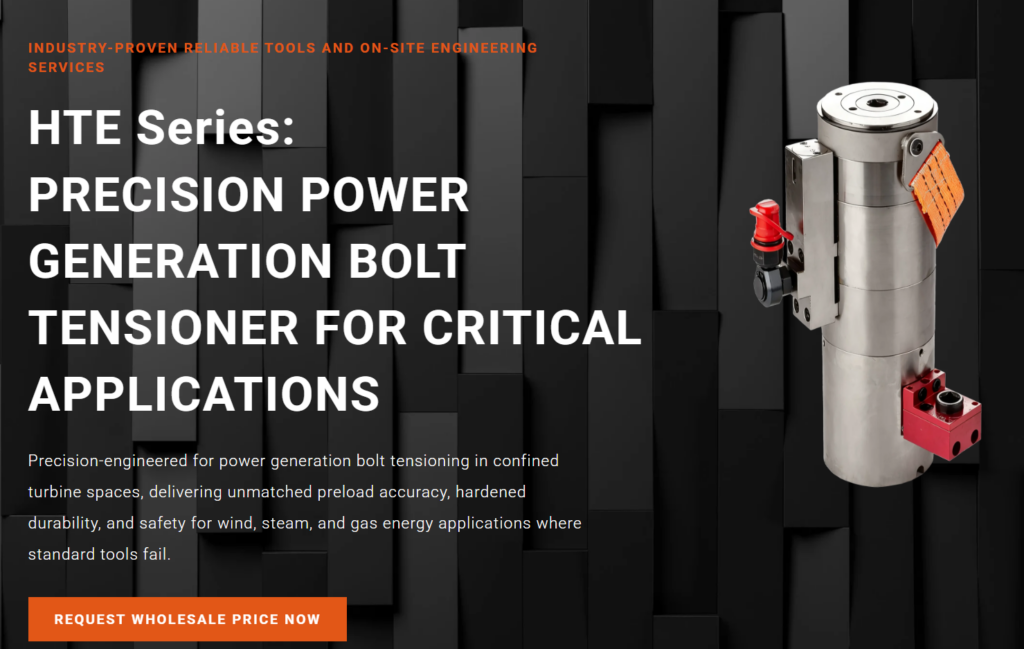
What Is the Enerpac HM Series Bolt Tensioner?
The Enerpac HM Series is a hydraulic bolt tensioning solution designed for applications where controlled and accurate bolt preload is required.
Unlike a conventional hydraulic torque wrench, which applies torque directly to the nut, a hydraulic bolt tensioner applies hydraulic force to stretch the bolt. Once the required tension is achieved, the nut can be run down against the joint surface to retain the preload after hydraulic pressure is released.
This approach can reduce the influence of friction on the final bolt preload and is particularly useful for large, critical bolted connections.
Typical applications for hydraulic bolt tensioners include:
- Oil and gas pipelines
- Pressure vessels
- Heat exchangers
- Wind turbines
- Power plants
- Offshore platforms
- Heavy machinery
- Petrochemical equipment
More Consistent Bolt Preload
One of the main reasons engineers choose hydraulic bolt tensioners is the ability to achieve controlled bolt preload.
When torque is applied to a conventional bolted connection, part of the applied torque is consumed by friction. This means that only a portion of the input torque is converted into useful bolt tension.
Hydraulic bolt tensioning works differently. The tool applies a direct axial force to stretch the bolt. This makes the process less dependent on friction conditions and can provide more consistent preload across multiple bolts.
For critical flange connections, consistent preload can help reduce the risk of leakage and joint failure.
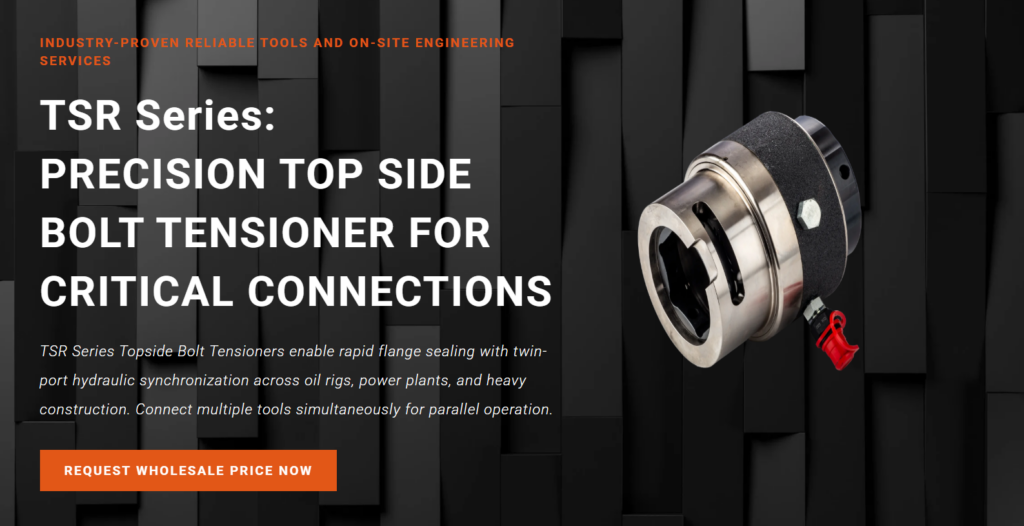
Suitable for Large-Diameter Bolts
As bolt size increases, conventional torque tightening becomes increasingly demanding.
Large bolts may require extremely high torque, which can lead to: Large reaction forces ; Heavy equipment; Limited access; Increased operator effort; Difficult manual handling
Hydraulic bolt tensioners are particularly useful for large-diameter fasteners because the required bolt load can be generated hydraulically rather than through a large rotational torque force.
This makes them attractive for heavy-duty industrial applications.
Improved Multi-Bolt Tightening
Large flanges often contain dozens or even hundreds of bolts. Ensuring that each bolt receives an appropriate preload is important for maintaining uniform joint loading.
Hydraulic tensioning systems can be used on multiple bolts simultaneously.
For example, operators may install several tensioners around a flange and pressurize them together. This can help achieve a more uniform bolt load and reduce the number of tightening stages required.
For large pipeline and pressure-vessel flanges, this can significantly improve maintenance efficiency.
Reduced Influence of Friction
Friction is one of the biggest variables in conventional torque tightening.
The actual bolt tension generated by a specific torque value can vary depending on: Thread condition; Lubrication; Nut condition; Surface finish; Corrosion; Washer condition
Because hydraulic bolt tensioners apply axial force directly to the bolt, the relationship between hydraulic pressure and bolt tension can be more predictable than traditional torque-based tightening.
This is one of the main technical reasons why hydraulic tensioning is selected for critical bolting applications.
Useful in Critical Industrial Applications
The Enerpac HM Series is particularly relevant to industries where bolted joint integrity is extremely important.
Oil and Gas
Oil and gas facilities contain many high-pressure flange connections. Improper bolt preload can contribute to gasket leakage and unplanned maintenance.
Hydraulic bolt tensioners can help maintenance teams achieve controlled preload during pipeline, valve, pressure vessel, and equipment maintenance.
Wind Energy
Wind turbines contain numerous large structural bolts, including connections around towers, foundations, nacelles, and other major components.
Because many of these bolts are large and difficult to tighten manually, hydraulic tensioning can provide an efficient solution.
Power Generation
Power plants rely on large bolted connections in turbines, boilers, heat exchangers, and pressure systems.
During scheduled shutdowns, fast and repeatable bolt tensioning can help reduce maintenance time.
Petrochemical Industry
Refineries and petrochemical plants contain complex piping systems and pressure equipment. Controlled flange assembly is essential for maintaining system integrity.
Better Access in Certain Applications
Another reason users choose hydraulic bolt tensioners is that they can be advantageous in applications where rotational access is limited.
A hydraulic tensioner works axially around the bolt rather than requiring a large torque wrench to rotate the nut.
This can be useful when several bolts are positioned close together or when there is limited radial working space.
However, users still need to verify that sufficient axial clearance is available for installing the tensioner.
Potentially Faster for Large Flange Connections
Time is an important factor during industrial shutdowns.
When a large flange contains many bolts, tightening each bolt individually with a torque wrench can take considerable time. Hydraulic tensioning allows multiple bolts to be tensioned simultaneously, depending on the application and system configuration.
This can improve productivity and reduce the amount of time equipment remains offline.
For industries where downtime is expensive, this efficiency can be an important consideration.
What Should You Consider Before Choosing an HM Series Tensioner?
Although the Enerpac HM Series may be suitable for many industrial applications, selecting a bolt tensioner should always start with the actual application requirements.
Important factors include:
Bolt Diameter
The tensioner must be compatible with the bolt diameter and thread configuration.
Required Bolt Load
Engineers should determine the required preload before selecting the tool. The tensioner’s capacity must be sufficient for the application.
Available Clearance
Both radial and axial clearance should be checked carefully. A tensioner may require more axial space than a conventional wrench.
Operating Pressure
The hydraulic pump and tensioner must be compatible and capable of achieving the required operating pressure.
Number of Bolts
For large flange connections, the number of available tensioners can affect the tightening sequence and overall productivity.
Working Environment
Offshore, refinery, and outdoor applications may expose tools to moisture, chemicals, dust, and other harsh conditions. Tool durability and maintenance requirements should therefore be considered.
Hydraulic Bolt Tensioner vs. Hydraulic Torque Wrench
A common question is whether a hydraulic bolt tensioner is better than a hydraulic torque wrench.
The answer depends on the application.
A hydraulic torque wrench may be preferred when:
- Access around the nut is convenient
- Different bolt sizes need to be handled
- A flexible tool is required
- The project involves a wide range of bolting applications
A hydraulic bolt tensioner may be preferred when:
- Large-diameter bolts are involved
- Accurate preload is critical
- Many bolts need to be tightened
- Simultaneous tensioning is beneficial
- Friction-related torque variation needs to be minimized
Neither tool is universally better. The correct choice depends on the joint design, bolt size, required preload, available space, and project requirements.
Conclusion
The Enerpac HM Series Bolt Tensioner attracts industrial users because hydraulic tensioning offers several important advantages for large and critical bolted connections. Direct axial bolt loading, consistent preload, reduced friction influence, and the ability to tension multiple bolts can make this technology particularly valuable in oil and gas, wind energy, power generation, petrochemical, and other heavy industries.
However, choosing a bolt tensioner should involve more than simply selecting a recognized brand. Bolt diameter, required preload, hydraulic pressure, available clearance, operating environment, and maintenance requirements all need to be evaluated.
For companies looking for reliable bolting equipment, comparing different hydraulic bolt tensioner manufacturers and understanding the actual requirements of the application can help achieve a better balance between performance, safety, and cost.
Whether you are working on a pipeline flange, pressure vessel, wind turbine, or heavy industrial machine, the right hydraulic bolt tensioning system can help improve bolting accuracy, reduce maintenance time, and provide more reliable joint performance.
