
Flanges are widely used in industrial equipment and piping systems to create secure and maintainable connections between pipes, valves, pumps, pressure vessels, and other components. Different flange designs are developed for different operating conditions, and selecting the right flange is important for safety, reliability, and long-term performance.
The FA9TE flange is one type of industrial flange that may be considered for demanding mechanical and piping applications. But what exactly is a FA9TE flange used for? Can it be used in mining operations? And what factors should engineers consider before selecting one?
In this article, we will look at the typical applications of FA9TE flanges and discuss whether they can be suitable for the mining industry.

What Is a FA9TE Flange?
A flange is a mechanical component used to connect two sections of pipe or connect piping to equipment such as pumps, valves, and pressure vessels. Flanged connections normally use bolts and nuts to create a secure joint, while a gasket is commonly installed between the flange faces to help prevent leakage.
The FA9TE designation refers to a specific flange design or configuration used in industrial applications. When selecting this type of flange, engineers should not only consider the flange name but also verify its dimensions, pressure rating, material, bolt pattern, sealing requirements, and compatibility with the connected equipment.
Because industrial applications can vary significantly, the suitability of a particular FA9TE flange should always be evaluated according to the actual project specifications.
Where Are FA9TE Flanges Commonly Used?
Flanges are especially valuable in systems where equipment needs to be installed, inspected, repaired, or replaced regularly.
Depending on the specific design and specifications, FA9TE flanges may be considered for applications such as:
- Industrial piping systems
- Oil and gas equipment
- Petrochemical plants
- Power generation facilities
- Mining equipment
- Heavy machinery
- Water and process systems
- Industrial pumps and valves
- Pipeline maintenance
One of the major advantages of a flanged connection is that it can be disassembled more easily than a permanently welded connection. This makes flanges particularly useful in industries where regular maintenance is required.
Can FA9TE Flanges Be Used in the Mining Industry?
Yes, a suitable FA9TE flange can potentially be used in mining applications, provided that its specifications meet the requirements of the specific system.
Mining environments can be extremely demanding. Equipment may be exposed to heavy loads, vibration, dust, moisture, abrasive materials, and significant temperature variations.
For this reason, flange selection in mining applications should consider several important factors.
1. Pressure Requirements
Mining systems can involve water, slurry, compressed air, hydraulic systems, and other fluids. The selected flange must have an appropriate pressure rating for the application.
Using a flange that is not rated for the required working pressure can create serious safety and reliability problems.
2. Material Selection
Material quality is particularly important in mining environments.
Depending on the application, flanges may need to withstand:
- Corrosion
- Abrasion
- Heavy mechanical loads
- Vibration
- Moisture
- Chemical exposure
The flange material should therefore be selected according to the operating environment rather than based only on initial purchase price.
3. Bolt and Gasket Compatibility
A flange connection is a complete system. The flange itself is only one part of the joint.
Bolts, nuts, washers, and gaskets must be compatible with the flange and operating conditions.
Incorrect bolt selection or uneven bolt tightening can result in gasket damage, leakage, or premature joint failure.
4. Vibration and Heavy Loads
Mining equipment often operates under continuous vibration.
Crushers, conveyors, pumps, hydraulic equipment, and processing machinery may experience dynamic loads that can affect bolted connections.
Proper flange alignment and controlled bolt tightening are therefore important for maintaining joint integrity.
Why Is Proper Flange Installation Important?
Choosing the correct flange is only the first step. Proper installation is equally important.
A flange joint needs to be correctly aligned before bolts are installed and tightened. If the flange faces are significantly misaligned, forcing the connection together with bolts can place unwanted stress on the piping system.
During installation and maintenance, specialized tools can make this process safer and more efficient.
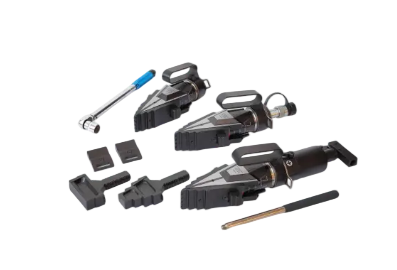
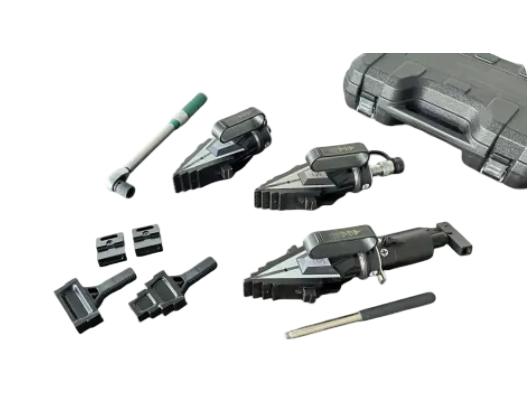
For example, flange alignment tools can help correct rotational or lateral misalignment, while hydraulic flange spreaders can safely create a controlled gap between flange faces during maintenance.
After alignment, hydraulic torque wrenches or hydraulic bolt tensioners can be used to achieve controlled bolt preload.
This complete process helps create a more reliable flange connection.
FA9TE Flange and Heavy-Duty Industrial Applications
Mining is not the only industry where robust flange connections are important.
Similar requirements can be found in:
Oil and Gas
Oil and gas pipelines, valves, pressure vessels, and processing equipment rely heavily on bolted flange connections.
Power Generation
Power plants use flanges throughout piping systems, pumps, turbines, heat exchangers, and other equipment.
Petrochemical
Chemical and petrochemical facilities require reliable connections that can withstand demanding pressure and temperature conditions.
Heavy Machinery
Large industrial machines often require removable connections that can be inspected and maintained efficiently.
Water and Wastewater
Pumps, pipelines, valves, and treatment equipment commonly use flanged connections for easier installation and maintenance.
How to Choose the Right FA9TE Flange?
Before purchasing a FA9TE flange, engineers and buyers should verify several technical specifications.
Flange Dimensions
Check the outside diameter, flange thickness, bolt-hole diameter, bolt-hole pattern, and overall dimensions.
Pressure Rating
Make sure the flange can safely handle the required operating pressure.
Material
Select a material suitable for the working environment, fluid, temperature, corrosion conditions, and mechanical loads.
Sealing Method
The gasket type and flange sealing surface should be compatible with the application.
Bolt Requirements
Verify the correct bolt diameter, grade, length, and tightening requirements.
Industry Standards
Always confirm that the flange complies with the applicable project, engineering, and industry standards.
What Tools Are Used for FA9TE Flange Maintenance?
Flange maintenance often requires more than just a wrench.
Depending on the application, technicians may use:
- Hydraulic flange spreaders
- Flange alignment tools
- Hydraulic torque wrenches
- Hydraulic bolt tensioners
- Hydraulic pumps
- High-pressure hoses
- Torque wrench accessories
For large industrial flange connections, hydraulic tools can significantly reduce manual effort and improve the consistency of maintenance work.
Conclusion
The FA9TE flange can be considered for a variety of industrial applications, including demanding environments such as mining, oil and gas, power generation, petrochemical processing, and heavy machinery.
However, whether a specific FA9TE flange is suitable for a mining application depends on its actual specifications, including pressure rating, material, dimensions, bolt configuration, gasket requirements, and operating environment.
For mining and other heavy industries, selecting the right flange should always be combined with proper alignment, bolting, and maintenance practices. Using professional flange alignment tools, hydraulic flange spreaders, hydraulic torque wrenches, and bolt tensioners can help improve installation efficiency and joint reliability.
If you are selecting a flange for a specific mining, pipeline, or industrial project, always verify the technical requirements with your engineering team or an experienced flange and bolting equipment supplier before purchasing.
