
In industrial maintenance and equipment installation, not every bolted connection is easy to access. Large nuts may be positioned between pipes, close to structural supports, or inside compact machinery assemblies. In these situations, conventional torque tools may not provide enough clearance to tighten or loosen bolts efficiently.
The XLCT Series hydraulic cassette torque wrench is a solution worth considering for industrial bolting applications where access is restricted and controlled torque is required. Its cassette-style configuration allows the tool to be selected according to the nut size and available working space, subject to the specifications of the particular model.
This article explains how hydraulic cassette torque wrenches work, where they can be useful in confined spaces, and what engineers should consider when selecting a suitable bolting solution.
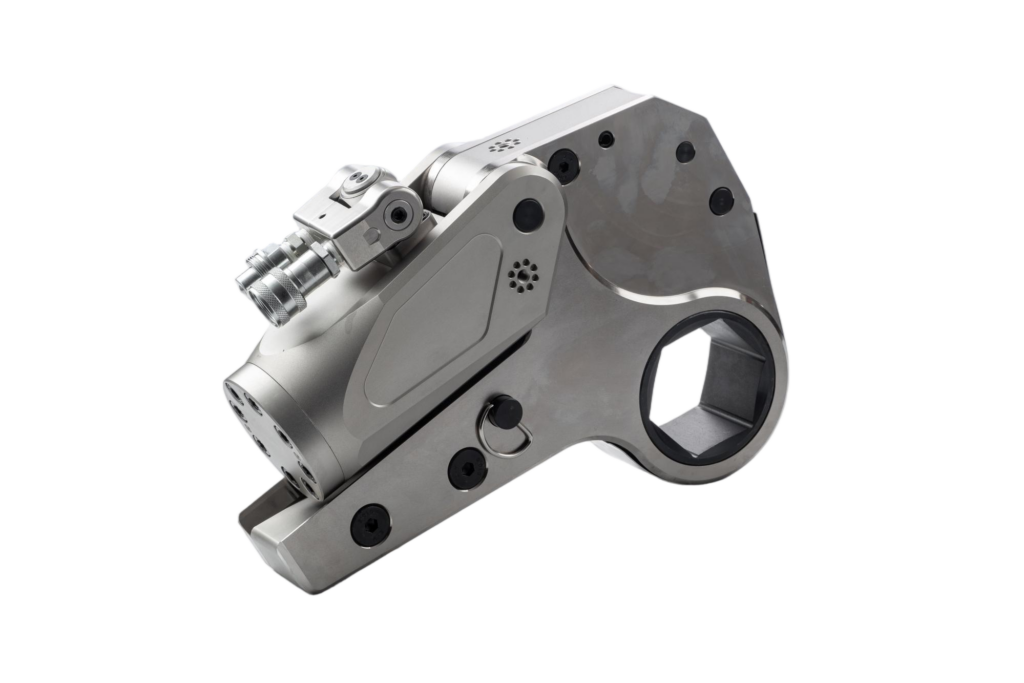
What Is a Hydraulic Cassette Torque Wrench?
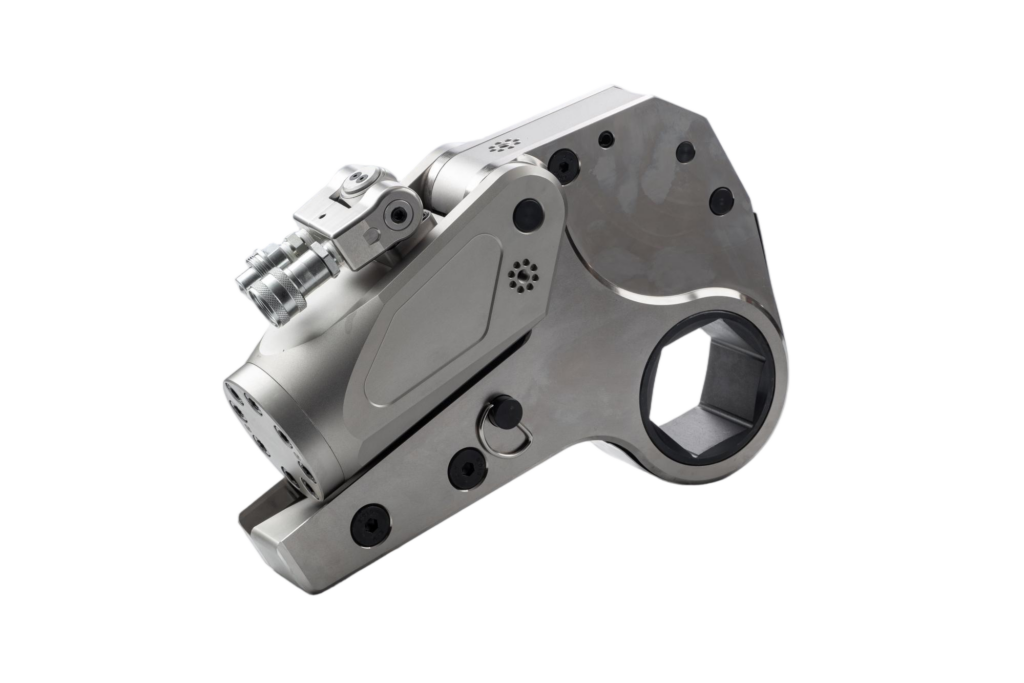
A hydraulic cassette torque wrench is a powered bolting tool designed to apply controlled torque to nuts and bolts. It typically consists of a hydraulic drive unit and an interchangeable cassette head that fits around the nut.
Unlike conventional socket-style hydraulic torque wrenches, a cassette wrench can be particularly useful when the space surrounding a nut is limited. The interchangeable head configuration also allows users to select a suitable cassette for different nut sizes, provided the selected head is compatible with the drive unit.
Hydraulic power enables the tool to generate high torque without requiring operators to apply the same physical effort as they would with a manual wrench.
For industrial applications involving large fasteners, the combination of controlled torque output and a compact working profile can be valuable.
Why Is a Cassette Torque Wrench Useful in Narrow Spaces?
Restricted access creates several challenges during industrial bolting. A wrench may have sufficient torque capacity but still be unsuitable if its head cannot fit around the nut or if there is insufficient clearance for operation.
The XLCT Series can be evaluated for applications where the cassette-style design offers practical access advantages.
1. Low-Clearance Bolted Connections
Some nuts are located close to machine housings, steel plates, or other structural components. The clearance above the nut may be insufficient for a conventional wrench head.
A suitable hydraulic cassette torque wrench can help technicians work in these restricted areas, provided the cassette dimensions and required operating clearance match the application.
Before selecting a tool, engineers should measure the available clearance around the nut rather than relying only on the nominal bolt size.
2. Dense Industrial Piping Systems
Industrial plants often contain closely arranged pipes, valves, and flanged connections. During installation or maintenance, nearby components may limit the movement of standard bolting tools.
A cassette-style hydraulic torque wrench may provide an alternative for accessible nuts in these compact arrangements.
The tool’s outer dimensions, cassette profile, reaction arrangement, and hose routing should all be evaluated to confirm that the wrench can be installed and operated safely.
3. Large Flange Connections
Flanges are widely used in industrial piping, pressure equipment, and process systems. Some flange bolts are positioned close to adjacent equipment or structural supports, making access difficult.
A hydraulic cassette torque wrench can help apply the specified torque to compatible flange fasteners where its geometry suits the installation.
For critical flange connections, however, tool selection is only one part of the process. The tightening sequence, gasket requirements, bolt condition, lubrication assumptions, and specified preload or torque must also be considered.
4. Equipment Installation and Maintenance
Pumps, compressors, industrial machinery, and heavy equipment may contain large fasteners positioned in narrow working areas.
During installation, inspection, or component replacement, a cassette torque wrench can help technicians apply controlled torque without relying on long manual levers.
Its suitability depends on the required torque, nut dimensions, available space, and the manufacturer’s operating limits.
How Does a Hydraulic Cassette Torque Wrench Work?
A hydraulic cassette torque wrench uses pressurized hydraulic fluid to drive a mechanism that applies rotational force to the fastener.
In a typical system, a compatible hydraulic pump supplies pressure to the wrench through hydraulic hoses. The drive mechanism converts the hydraulic force into torque, while the cassette engages the nut.
The reaction arrangement transfers the opposing force to an appropriate supporting surface. Correct reaction-point selection is essential because the reaction force can be substantial during high-torque operations.
The general operating process includes the following steps:
- Confirm the bolting requirements. Determine the specified torque or preload, fastener dimensions, and tightening sequence.
- Check tool compatibility. Verify that the cassette fits the nut and is approved for use with the selected drive unit.
- Inspect the working area. Ensure there is enough room for the cassette, reaction arrangement, hoses, and safe operator positioning.
- Prepare the hydraulic system. Check the pump, hoses, couplings, and wrench according to the manufacturer’s instructions.
- Position the wrench. Engage the cassette fully with the fastener and establish a suitable reaction point.
- Apply torque under control. Operate the system according to the specified procedure and monitor the tool throughout the cycle.
- Verify completion. Follow the project’s inspection and documentation requirements before moving to the next fastener.
These steps provide a general overview. The exact operating procedure must follow the instructions for the specific XLCT Series model and hydraulic power unit.
What Should You Consider When Choosing the XLCT Series?
Not every hydraulic cassette wrench is suitable for every narrow-space application. Several factors should be checked before purchase.
Required torque: Select a model whose rated operating range covers the torque required by the bolting procedure. Avoid choosing a wrench based solely on its maximum torque rating.
Nut size and cassette compatibility: Confirm the exact nut dimensions and select a compatible cassette. Check whether the required cassette is included or needs to be ordered separately.
Available clearance: Measure the space around and above the fastener. Consider nearby pipes, walls, brackets, and equipment that may interfere with tool installation or movement.
Reaction point: Confirm that a suitable reaction surface is available and that the tool can react safely against it. Do not use improvised supports or unsuitable contact points.
Hydraulic pump compatibility: Check the required working pressure, flow, hose connections, and pump capacity against the wrench manufacturer’s specifications.
Working environment: Consider temperature, contamination, corrosion, and any hazardous-area restrictions. The complete hydraulic system must be suitable for the intended location.
Service and maintenance: Review inspection requirements, seal replacement procedures, calibration or torque verification recommendations, and the availability of technical support.
Hydraulic Cassette Torque Wrench vs. Conventional Hydraulic Torque Wrench
Both cassette-style and conventional hydraulic torque wrenches can provide controlled torque for industrial bolting. Their main differences relate to head configuration and access requirements.
A conventional square-drive hydraulic torque wrench uses a square drive and a compatible socket. It can be versatile for a range of fastening tasks, particularly where sufficient space is available around the nut.
A hydraulic cassette torque wrench uses a cassette head that fits around a specified nut size. This configuration can be advantageous in applications where a suitable cassette offers a lower-profile or more practical fit.
Neither design is automatically better for every job. The correct choice depends on the fastener geometry, clearance, required torque, reaction arrangement, and operating procedure.
For confined-space bolting, checking the actual dimensions of the assembled tool is often more useful than comparing product names alone.
Safety Tips for Bolting in Confined Spaces
High-torque bolting operations involve significant forces, so safety must remain a priority even when the tool is designed for restricted access.
Before operation, inspect the wrench, cassette, hydraulic hoses, and couplings for damage. Make sure all components are compatible and rated for the intended working pressure.
Keep hands clear of pinch points between the cassette, nut, reaction arm, and surrounding structure. Never hold the reaction point by hand or attempt to reposition the tool while hydraulic pressure is applied.
Operators should also ensure that hoses are routed away from sharp edges and moving components. Hydraulic pressure must be released according to the manufacturer’s instructions before disconnecting or adjusting the equipment.
Where flange integrity is critical, follow the approved bolting procedure rather than assuming that applying the specified torque alone guarantees the correct joint preload.
Conclusion
The XLCT Series hydraulic cassette torque wrench can be considered for industrial bolting tasks where large fasteners must be tightened or loosened in restricted working spaces. Potential applications include compact piping arrangements, flange connections, machinery installation, and industrial maintenance.
Its effectiveness depends on selecting the correct torque capacity, cassette size, tool configuration, and hydraulic power system for the actual job.
For engineers and maintenance teams, the most reliable approach is to evaluate the fastener and surrounding space first, then confirm that the selected wrench can operate safely within those constraints.
When access is limited, choosing the right hydraulic cassette torque wrench can help make high-torque bolting more manageable while supporting consistent and controlled maintenance procedures.
