
Chemical pressure vessels are commonly used in industries where equipment must safely contain liquids, gases, or chemical substances under controlled pressure and temperature. During installation, maintenance, and equipment replacement, many pressure vessels require the removal and tightening of large numbers of high-strength bolts.
For these applications, an electric torque wrench can provide a practical solution for controlled and efficient bolt tightening. Compared with manual tools, an electric torque wrench can reduce physical effort while providing repeatable torque output, making it suitable for industrial maintenance environments.
This guide explains how electric torque wrenches can be used for chemical pressure vessel applications, what factors should be considered, and how proper bolt tightening contributes to reliable flange connections.
What Is a Chemical Pressure Vessel?
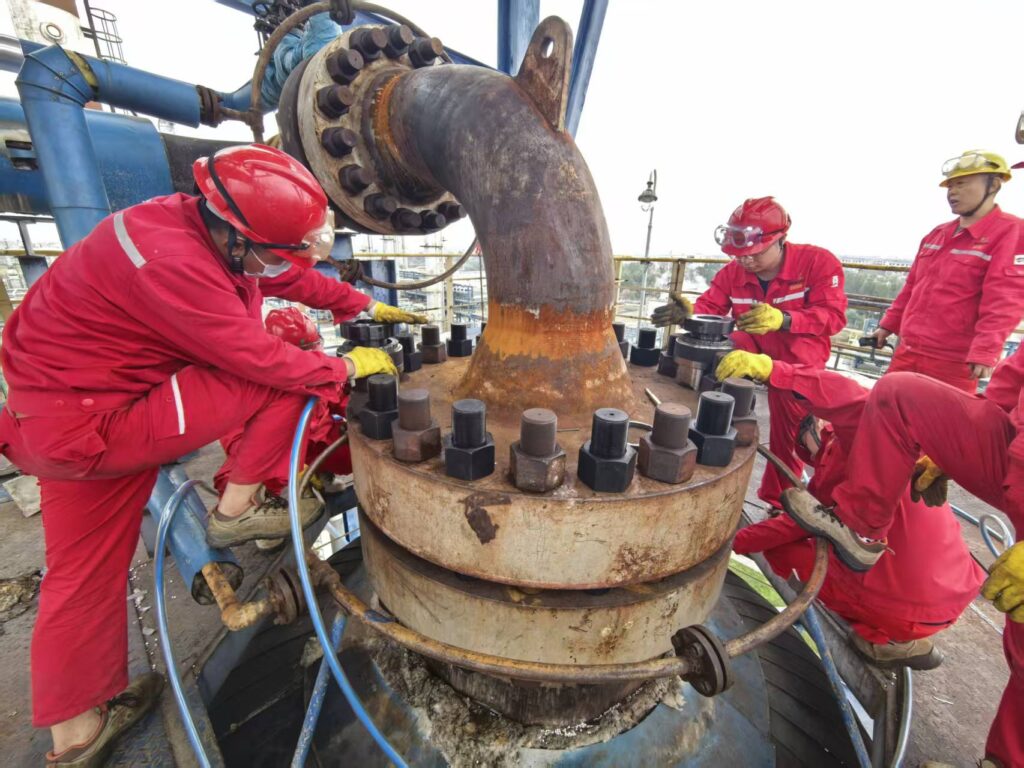
A chemical pressure vessel is a specially designed container used to hold chemical substances under pressure or at elevated temperatures. Depending on the process, pressure vessels may be found in chemical plants, petrochemical facilities, pharmaceutical production, gas processing, and other industrial environments.
Typical equipment may include: Chemical reactors; Storage vessels; Heat exchangers; Separators; Filters; Process vessels; Pressure tanks; Piping-connected vessels
Many of these systems use bolted flange connections to connect vessels with pipes, valves, covers, or other components. During assembly and maintenance, these bolted connections must be tightened properly.
Incorrect bolt tightening can create uneven gasket compression, which may increase the risk of leakage or connection problems.
Why Is Bolt Tightening Important for Pressure Vessels?
A pressure vessel flange connection is not simply a matter of tightening every bolt as much as possible.
The objective is to achieve an appropriate and relatively uniform clamping force across the joint. The bolts, flange, and gasket work together to maintain the integrity of the connection.
If some bolts are significantly tighter than others, the load distribution across the flange may become uneven. This can affect gasket compression and potentially create sealing problems.
For this reason, industrial maintenance teams often use controlled torque tools rather than conventional hand tools when working with large or critical bolted connections.
An electric torque wrench can help operators apply a predefined torque value repeatedly across multiple bolts.
How Can an Electric Torque Wrench Be Used on Chemical Pressure Vessels?
An electric torque wrench can be used during both assembly and maintenance operations.
For example, when a pressure vessel cover needs to be removed, the electric wrench can assist with loosening the existing bolts. After inspection or maintenance is completed, the same type of tool can be used to tighten the bolts during reassembly.
Typical applications include:
1. Pressure Vessel Cover Bolts
Many pressure vessels have removable covers or heads that are secured using multiple bolts.
During maintenance, operators may need to remove dozens of bolts before accessing the internal components. An electric torque wrench can significantly reduce manual work during this process.
During reassembly, controlled torque can be applied according to the specified tightening procedure.
2. Flange Connections
Chemical processing equipment often contains multiple flange connections between vessels, pipes, valves, and other components.
Large flange bolts can require considerable torque. An electric torque wrench provides powered torque output, allowing operators to tighten these bolts more efficiently than with conventional manual tools.
3. Heat Exchanger Connections
Heat exchangers are widely used in chemical and process industries. Their maintenance may require removing covers, access plates, or flange-connected components.
Because these connections may contain many bolts, an electric torque wrench can help improve maintenance efficiency while maintaining consistent tightening procedures.
4. Equipment Installation and Replacement
When new pressure vessels or related equipment are installed, numerous bolted connections may need to be assembled.
Using an electric torque wrench can help reduce installation time, particularly when the project involves a large number of repetitive bolt-tightening operations.
Electric Torque Wrench vs. Manual Torque Tools
Manual torque tools can be useful for smaller bolts and less demanding applications. However, chemical pressure vessel maintenance can involve large bolt sizes, high torque requirements, and repetitive work.
An electric torque wrench offers several practical advantages.
Higher Working Efficiency
Operators do not need to manually generate high torque through a long lever. The electric motor provides the required power, which can make repetitive bolting operations faster.
Reduced Physical Effort
Large pressure vessel bolts may require substantial torque. Using powered equipment can reduce the physical workload for operators, particularly during long maintenance operations.
Repeatable Torque
A properly selected electric torque wrench can provide controlled and repeatable torque output. This is useful when multiple bolts need to be tightened according to the same torque specification.
Suitable for Repetitive Bolting
Pressure vessel maintenance often involves many bolts with similar specifications. Electric tools are particularly useful when the same tightening procedure needs to be repeated across an entire flange.
What Should You Consider When Choosing an Electric Torque Wrench?
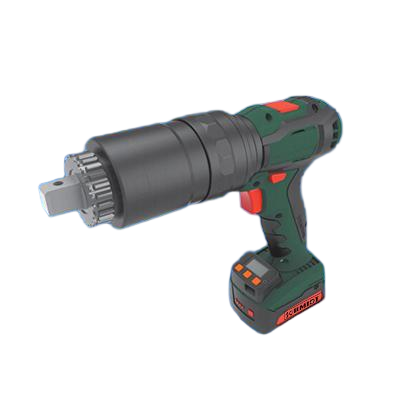
Not every electric torque wrench is suitable for every pressure vessel application. Several factors should be evaluated before selecting a tool.
1. Required Torque Range
The first consideration is the torque required by the vessel manufacturer’s specifications or the applicable bolting procedure.
The selected wrench should have a suitable torque range for the actual bolt size and grade.
Avoid choosing a tool simply because it has a high maximum torque rating. The working range and required torque should both be considered.
2. Bolt Size and Drive Size
The bolt diameter and nut dimensions determine the required socket and drive configuration.
Make sure the electric torque wrench can accommodate the required sockets and accessories.
3. Working Space
Chemical pressure vessels can have restricted spaces around flanges, pipes, valves, and structural components.
A compact wrench may be easier to position in confined areas. The thickness of the tool head and clearance around the nut should therefore be checked before selection.
4. Torque Accuracy and Repeatability
For critical bolted connections, consistent torque output is important.
A suitable industrial electric torque wrench should provide stable torque performance and should be used according to the manufacturer’s operating and calibration recommendations.
5. Power Supply
Electric torque wrenches may be available in different power configurations, depending on the model.
Before purchasing, check the available voltage, frequency, power requirements, and working environment at the job site.
Is an Electric Torque Wrench Suitable for Chemical Plant Maintenance?
In many cases, yes, but the specific working environment must be evaluated.
Chemical plants may contain hazardous substances, combustible gases, or other potentially dangerous conditions. Therefore, the tool selection should consider the site’s safety requirements rather than focusing only on torque output.
If the work area has specific requirements for electrical equipment, operators should confirm whether the selected electric torque wrench is approved and suitable for that environment.
In applications where electrical equipment is restricted, other torque solutions, such as hydraulic torque wrenches or suitable pneumatic systems, may need to be considered.
The correct choice depends on the actual site conditions, safety classification, and maintenance procedure.
Best Practices for Pressure Vessel Bolt Tightening
Using the right torque wrench is only part of the bolting process. Proper procedures are equally important.
Before tightening, inspect the bolts, nuts, threads, washers, and flange surfaces. The gasket should also be installed according to the equipment manufacturer’s instructions.
Operators should then follow the specified tightening sequence. For many flange connections, a cross-pattern or staged tightening procedure is used to distribute the load more evenly.
Instead of applying the final torque immediately, some procedures use several stages, such as an initial pass followed by intermediate and final torque passes.
The exact procedure should always follow the pressure vessel manufacturer’s instructions, engineering specifications, or applicable bolting standards.
Electric Torque Wrench for More Efficient Pressure Vessel Maintenance
Chemical pressure vessels require reliable assembly and maintenance because their bolted connections can play an important role in maintaining process containment.
An electric torque wrench can be a useful tool for pressure vessel covers, flange connections, heat exchangers, and other large bolted joints. Its powered operation can reduce manual effort, improve working efficiency, and provide repeatable torque when used correctly.
However, tool selection should always be based on the actual torque requirement, bolt size, available working space, power supply, accuracy requirements, and site safety conditions.
For industrial applications, an electric torque wrench should be considered as part of a complete bolting system rather than as an isolated tool. Proper sockets, reaction arrangements, tightening sequences, inspection procedures, and calibration practices all contribute to achieving a reliable bolted connection.
If your chemical pressure vessel project involves large or repetitive bolting operations, selecting the right torque solution in advance can help make installation and maintenance more efficient and controlled.
